

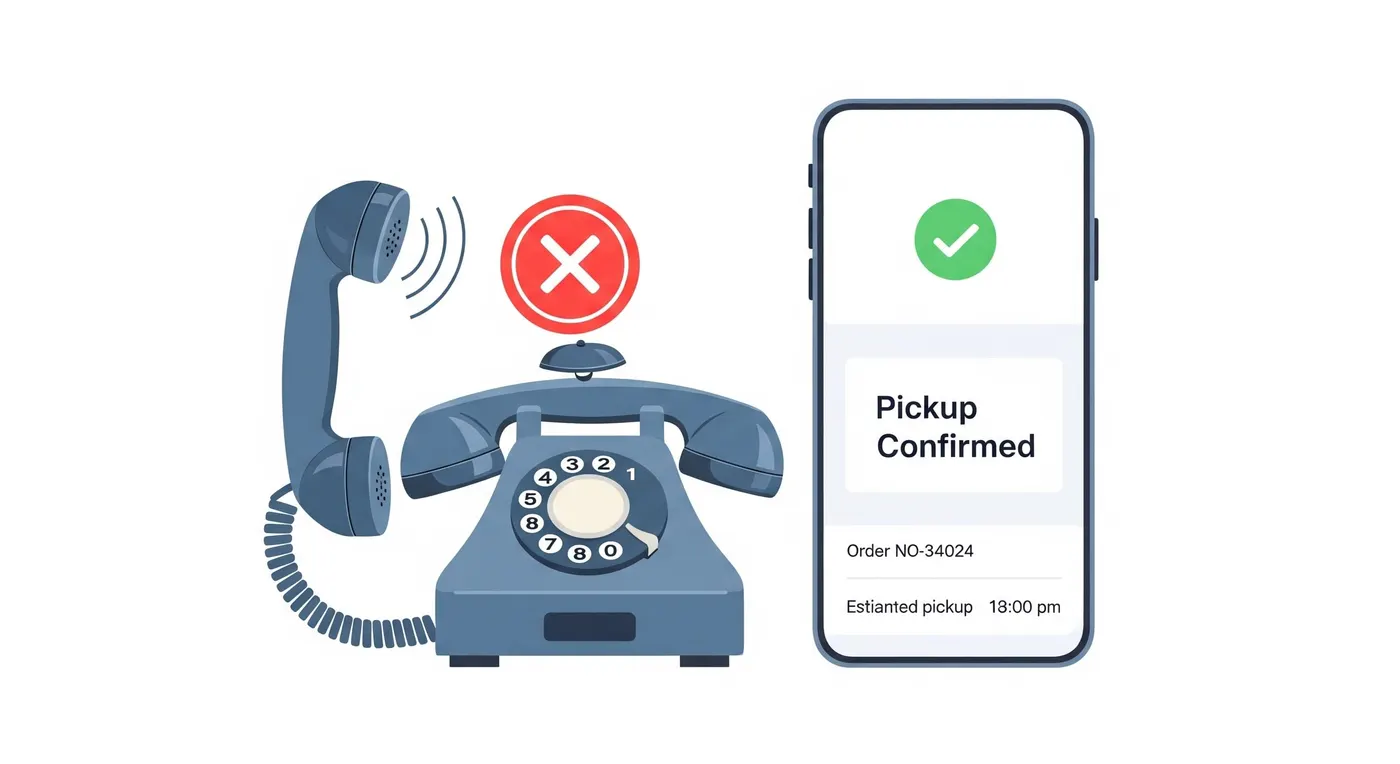
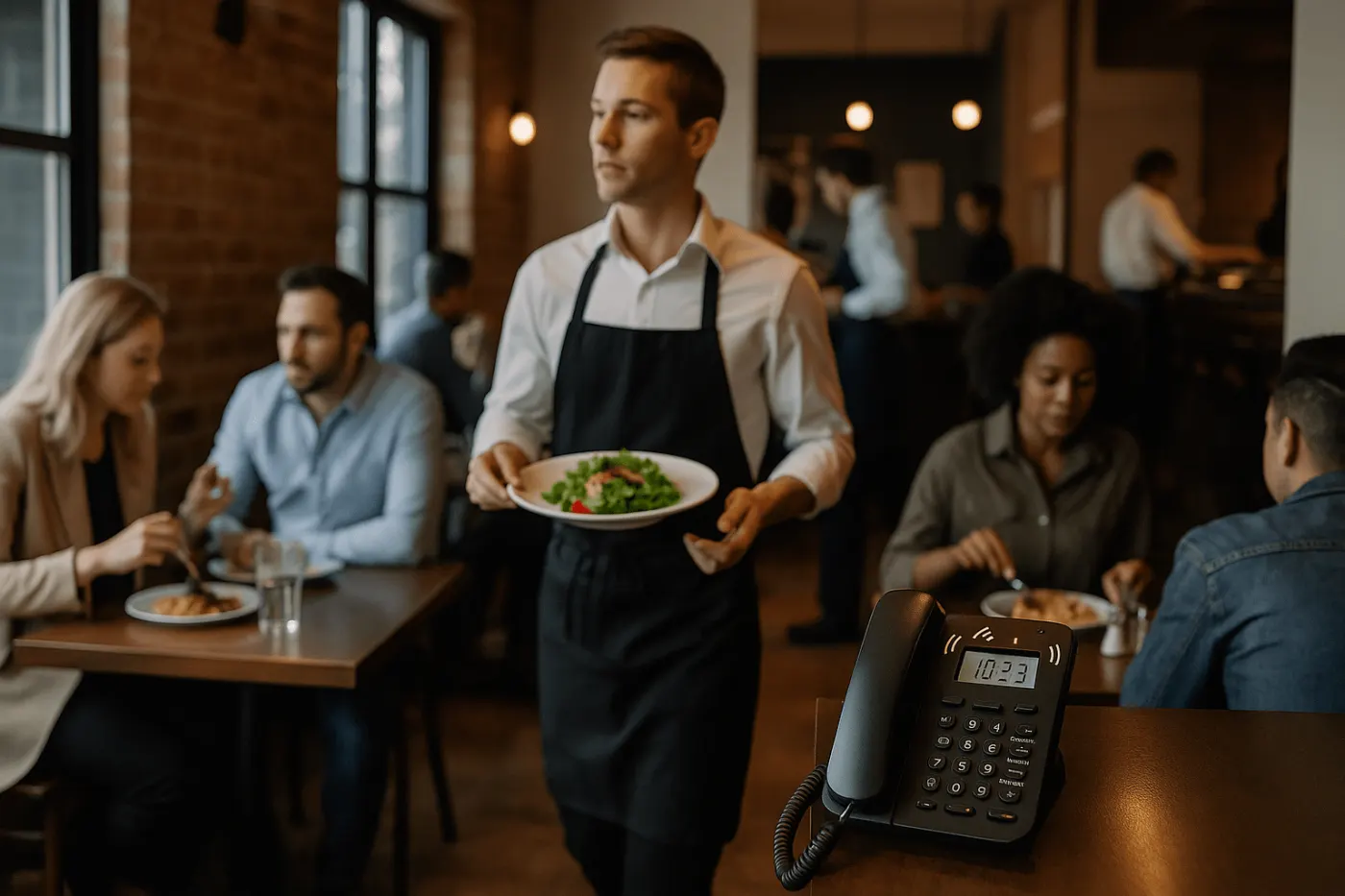
During a busy service, a phone-only pickup process competes with in-store guests and kitchen work. A digital pickup path can make demand visible, but it must fit the restaurant's menu, capacity, payment, preparation, and handoff operation.
Map the missed-call problem
- Calls received, answered, abandoned, and converted
- Order-entry time and correction rate
- Peak periods and staffing
- Items and modifiers that are hard to capture by phone
- Customer support and refund contacts
Define the digital pickup flow
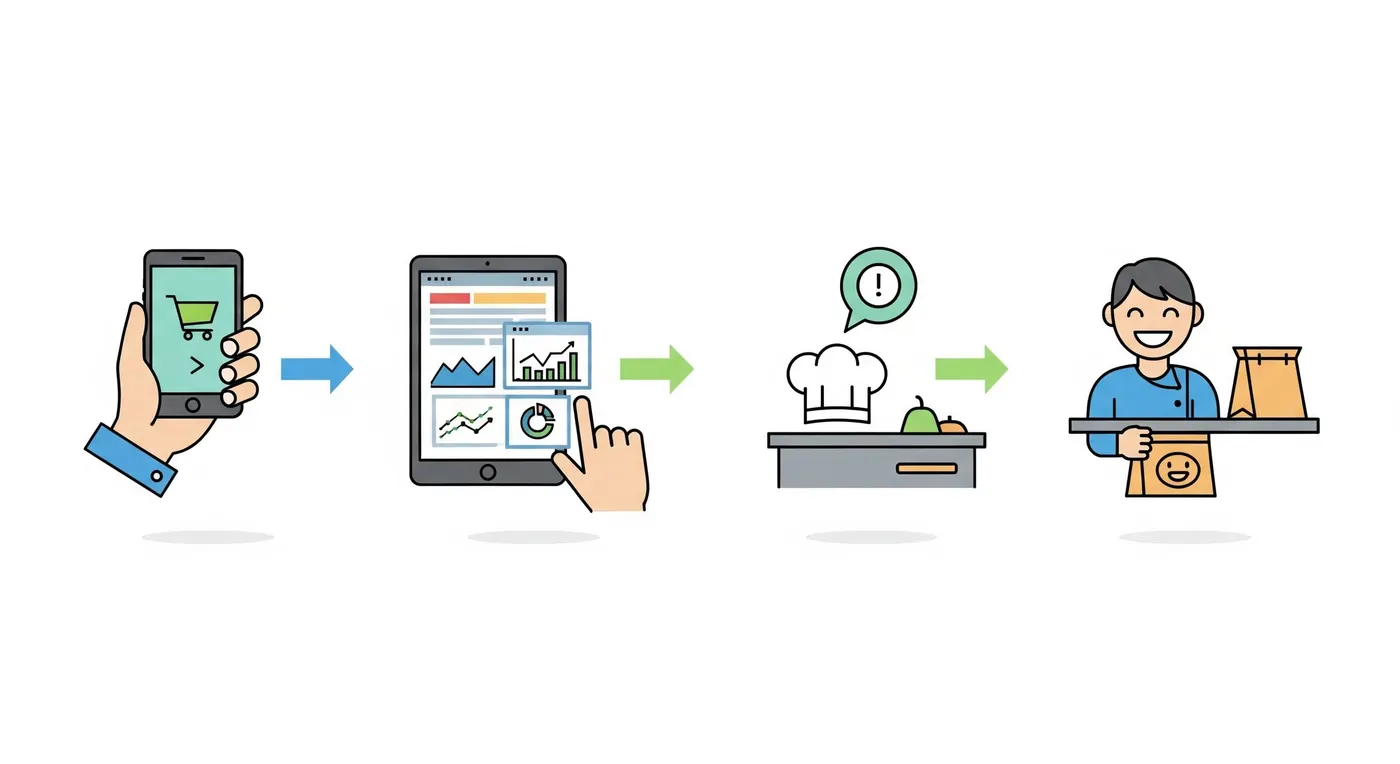
A customer chooses a location, orders from the current menu, selects ASAP or a supported future time, pays through the configured method, receives confirmation, and gets a clear ready-for-pickup message. Staff need the same order, timing, and status in their operating queue.
Plan for franchises and multiple locations
Define menu and pricing authority, store hours, capacity, taxes, payment accounts, brand rules, reporting, and local overrides. Confirm what is centralized and what each location operates.
Plan for marketplaces
Vendor onboarding, location mapping, catalog quality, payment responsibilities, status consistency, support, and settlement need explicit owners. Growth should be tested against support and operational capacity rather than an unlimited-scale promise.
Measure the change
- Completed pickup orders
- Abandoned calls and checkouts
- Order accuracy and refunds
- Preparation and wait time
- Staff workload
- Repeat use and customer feedback
Roll out with a baseline
Measure the current phone process first, pilot with selected locations, compare the same periods, and document external factors. Publish observed results only with a defined period, sample, source, and permission.