

Wonder connects kitchens, menus and ordering
Wonder's business case is a connected food operation: several restaurant concepts, prepared through its food-hall/kitchen model, available through a customer ordering experience. Its culinary description explains how Wonder kitchens prepare restaurant menus, and its restaurant-format help page distinguishes Made at Wonder menus from other local restaurants offered in its app. Sources reviewed November 10, 2026.
The useful lesson for an operator is coordinating catalog, production, order timing and handoff across brands. That requires kitchens, supply, labor, support and an operating system; an app alone does not reproduce the business. A multi-brand basket also needs a clear promise about which items can arrive together and which location prepares them.
What “By Wonder” means on another delivery app
A name such as Burger Baby by Wonder identifies a Wonder-associated restaurant concept in that marketplace listing. DoorDash's Burger Baby by Wonder listing and Uber Eats' Upper East Side listing provide direct examples. The label is about the restaurant/concept offering; it does not mean DoorDash or Uber owns Wonder, or that an order placed there has moved into Wonder's direct checkout.
Read the listed address, menu and fulfillment terms for the location. Availability, service windows, fees, delivery and pickup can vary by address and channel. A public listing demonstrates a distribution path, not that every Wonder concept or food hall is available everywhere on both platforms.
Direct channels and marketplace distribution coexist
Wonder operates its own customer experience, while Wonder-branded concepts also appear in DoorDash and Uber Eats. This contradicts the idea that building a direct platform necessarily means abandoning every third-party app. A business may use a marketplace for discovery and a direct channel for an owned customer journey, with different fees, support responsibilities and permitted data access.
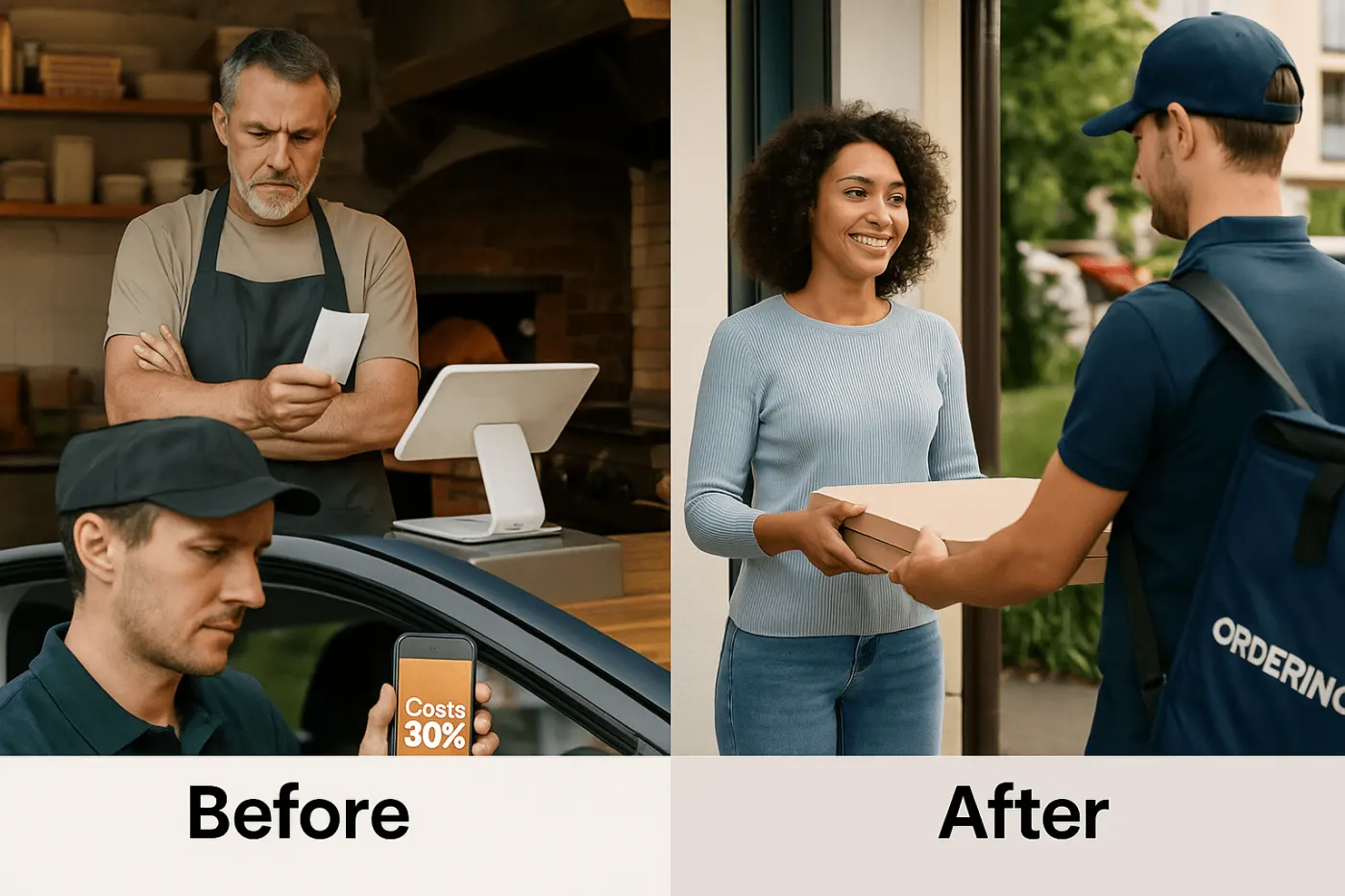
Compare the whole order in each channel: basket and price, payment, production routing, delivery provider, customer communications, refunds and settlement. A direct channel avoids the particular marketplace's acquisition commission only where that commission does not apply; it still incurs payments, technology, fulfillment, acquisition and support costs. No verified universal saving of 30% on every Wonder order is established by the sources here.
Wonder owns Grubhub; distribution is a different relationship
Just Eat Takeaway.com's January 7, 2025 completion announcement confirms the sale of Grubhub to Wonder. Wonder's February 28, 2025 integration message also records completion in January 2025. Ownership of Grubhub is a corporate relationship, separate from a Wonder menu being distributed on DoorDash or Uber Eats.
The September 15, 2026 DoorDash–Wonder announcement describes a strategic agreement involving Grubhub Campus Dining and an investment in Wonder. That specifically named business transaction should not be relabeled as DoorDash buying the whole of Grubhub or owning Wonder. An announcement and a completed transaction also need to be distinguished when tracking ownership.

Apply the operating lesson without assuming the same savings
Start with the part of the operation you need to control: the customer channel, merchant workflow, multi-brand preparation, delivery selection or reconciliation. Define the commercial relationship for each participant and measure cost and quality by channel. Use actual invoices, completed orders, refunds and support costs rather than using a funding valuation or an app feature list as proof of return on investment.
A restaurant group can evaluate a direct channel while retaining selected marketplace distribution. A builder serving several merchants also needs onboarding, catalog ownership, permissions, fee allocation and exception support. Neither approach needs to imitate Wonder's entire kitchen footprint to answer a narrower operating problem.
Ordering.co connects branded ordering channels, merchant operations, payments and delivery on a shared foundation. It does not supply Wonder's brands, kitchens, customers or results, and this case does not assert Wonder is an Ordering.co customer. Compare local-commerce models, review the multi-store operating path and discuss your order flow with one representative basket.