

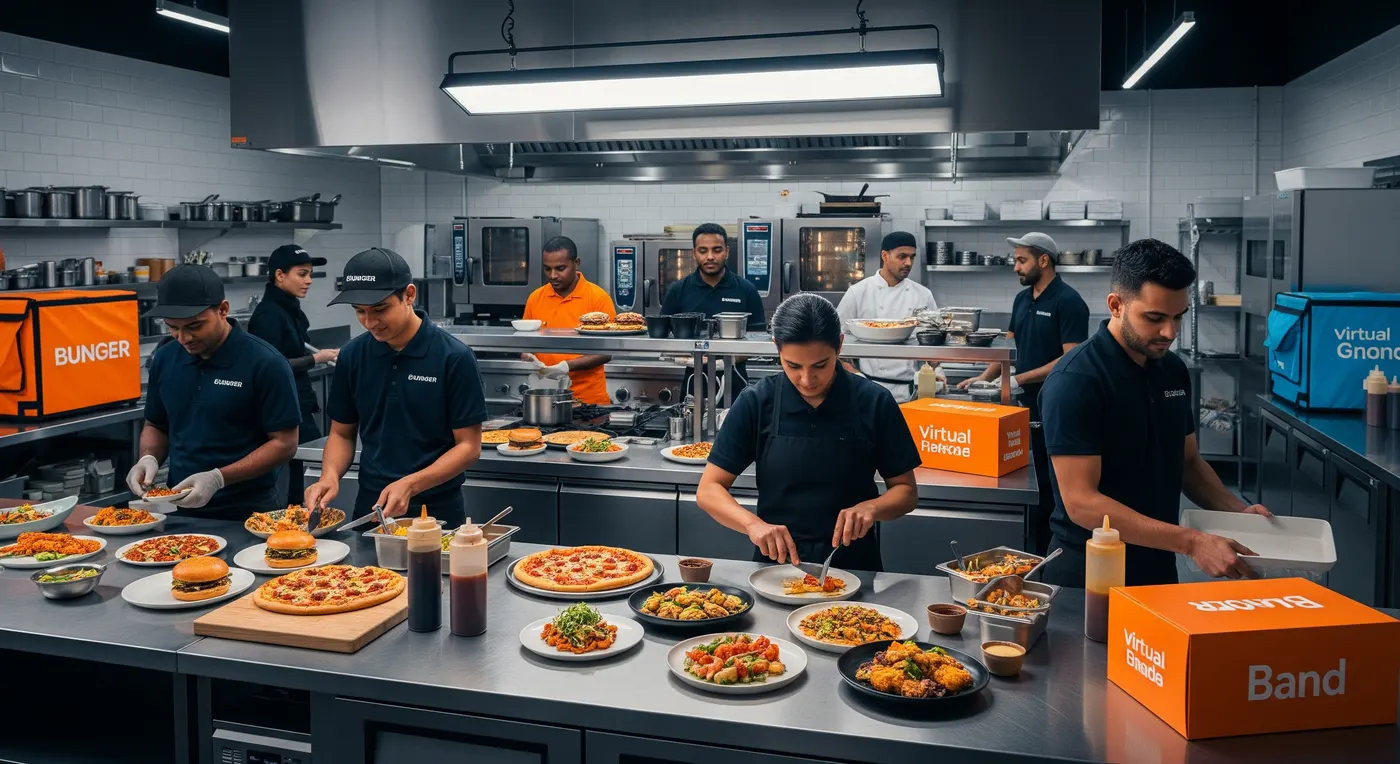
The culinary landscape is undergoing a profound transformation, driven by technological advancements and evolving consumer preferences. At the forefront of this revolution are ghost kitchens and virtual brands, concepts that have rapidly reshaped the traditional restaurant model.
These innovative dining solutions operate without the conventional brick-and-mortar storefronts, focusing instead on optimized delivery services. Their surge in popularity, particularly in recent years, signals a significant shift towards a delivery-centric future for the food industry.
This article will delve into the intricacies of ghost kitchens and virtual brands, exploring their definitions, the factors contributing to their rapid growth, their inherent advantages and challenges, and the exciting trends shaping their trajectory.
Compare the operating models below against the menu, kitchen capacity and customer journey your own business can support.
What is a Ghost Kitchen?
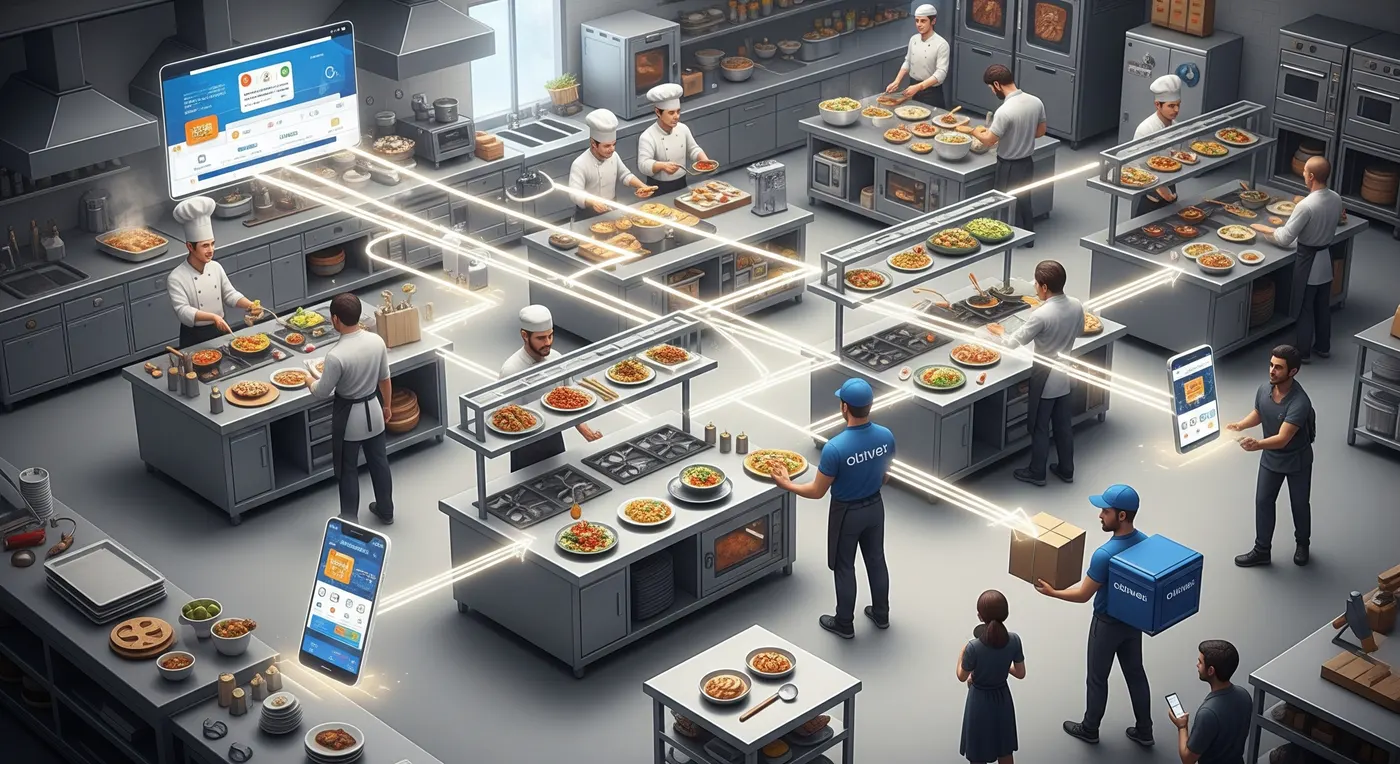
A ghost kitchen, also known as a cloud kitchen, dark kitchen, or commissary kitchen, is a professional cooking facility optimized for the preparation of delivery-only meals. Unlike traditional restaurants, ghost kitchens lack a physical dining area, waitstaff, or customer-facing presence.
Their primary function is to fulfill online food orders, typically received through third-party delivery platforms or proprietary apps. This model allows for significant operational efficiencies, as resources are solely dedicated to food production and packaging for off-premise consumption.
Key Characteristics:
* No dine-in space or storefront.
* Focus on delivery and takeout orders.
* Often located in industrial areas or shared kitchen spaces to minimize rent.
* Optimized for high-volume, efficient food preparation.
What is a Virtual Brand?
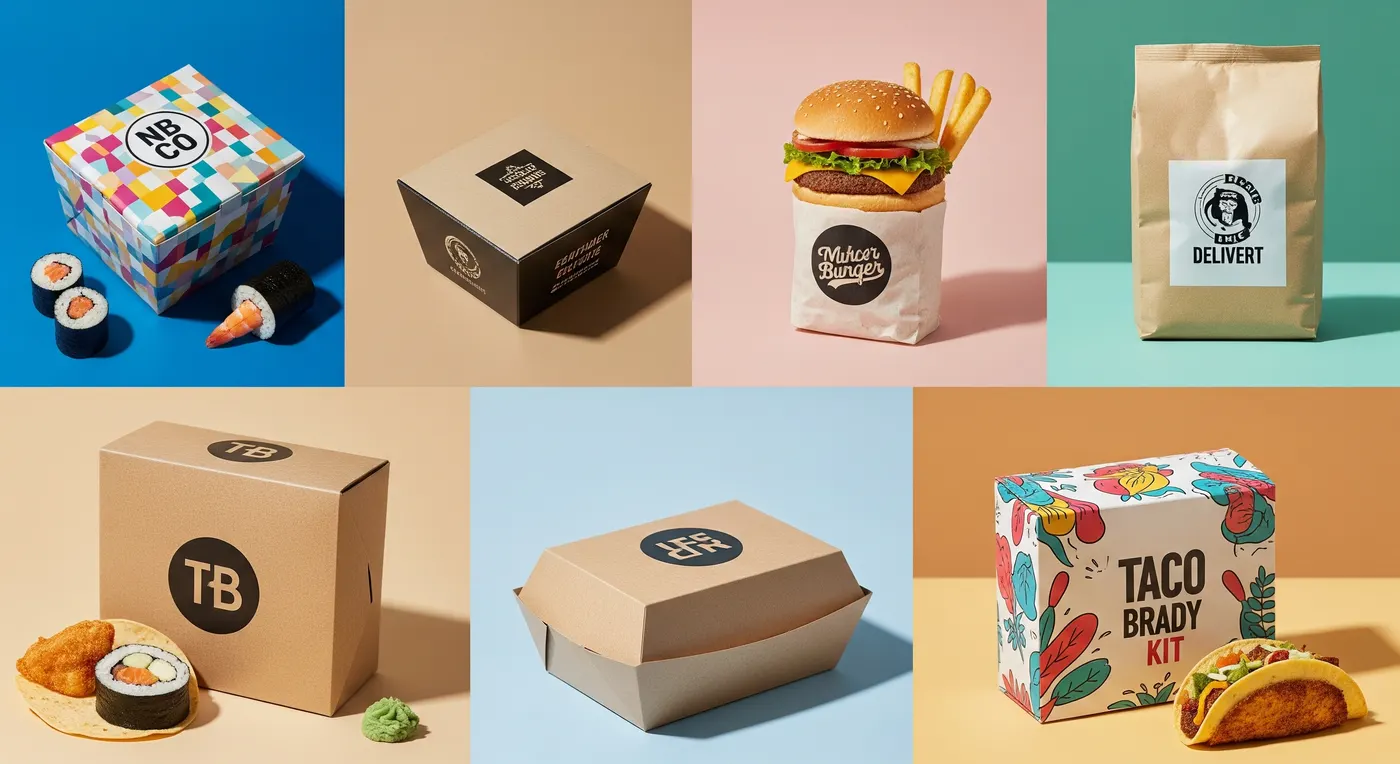
A virtual brand, or virtual restaurant, is a food concept that exists exclusively online, operating without its own dedicated physical restaurant location. These brands leverage existing kitchen infrastructure, often within a ghost kitchen or an established traditional restaurant, to prepare their menu items.
Virtual brands are distinct from ghost kitchens in that they are the *concept* or *menu*, while ghost kitchens are the *physical space* where the food is prepared. A single ghost kitchen can house multiple virtual brands, each with its own unique menu, branding, and online presence.
Key Characteristics:
* Operates solely through online ordering and delivery platforms.
* No physical storefront or customer interaction point.
* Utilizes existing kitchen facilities (ghost kitchens or traditional restaurants).
* Allows for rapid menu experimentation and brand diversification.
Practical Example: A traditional Italian restaurant might launch a virtual brand specializing in gourmet burgers, using its existing kitchen staff and equipment during off-peak hours to prepare the burger menu for delivery. This allows them to tap into a new market segment without the overhead of opening a new physical restaurant.
The Surge in Popularity: Why Now?
The rapid ascent of ghost kitchens and virtual brands can be attributed to a confluence of factors, many of which have been accelerated by recent global events and shifts in consumer behavior. The core drivers behind their popularity include:
1. Lower Operating Costs
A delivery-only kitchen may avoid a dining room and some front-of-house work. Compare its lease, fit-out, utilities, equipment, production labor, storage and courier handoff costs with the alternatives. Lower spending on one line does not establish lower total cost or a profitable brand.
Practical Example: A traditional restaurant in a high-rent urban area might pay tens of thousands of dollars monthly for rent and associated utilities. A ghost kitchen in a less prominent industrial zone could operate for a fraction of that cost, freeing up capital for marketing or menu development.
2. Focus on Delivery-Only Operations
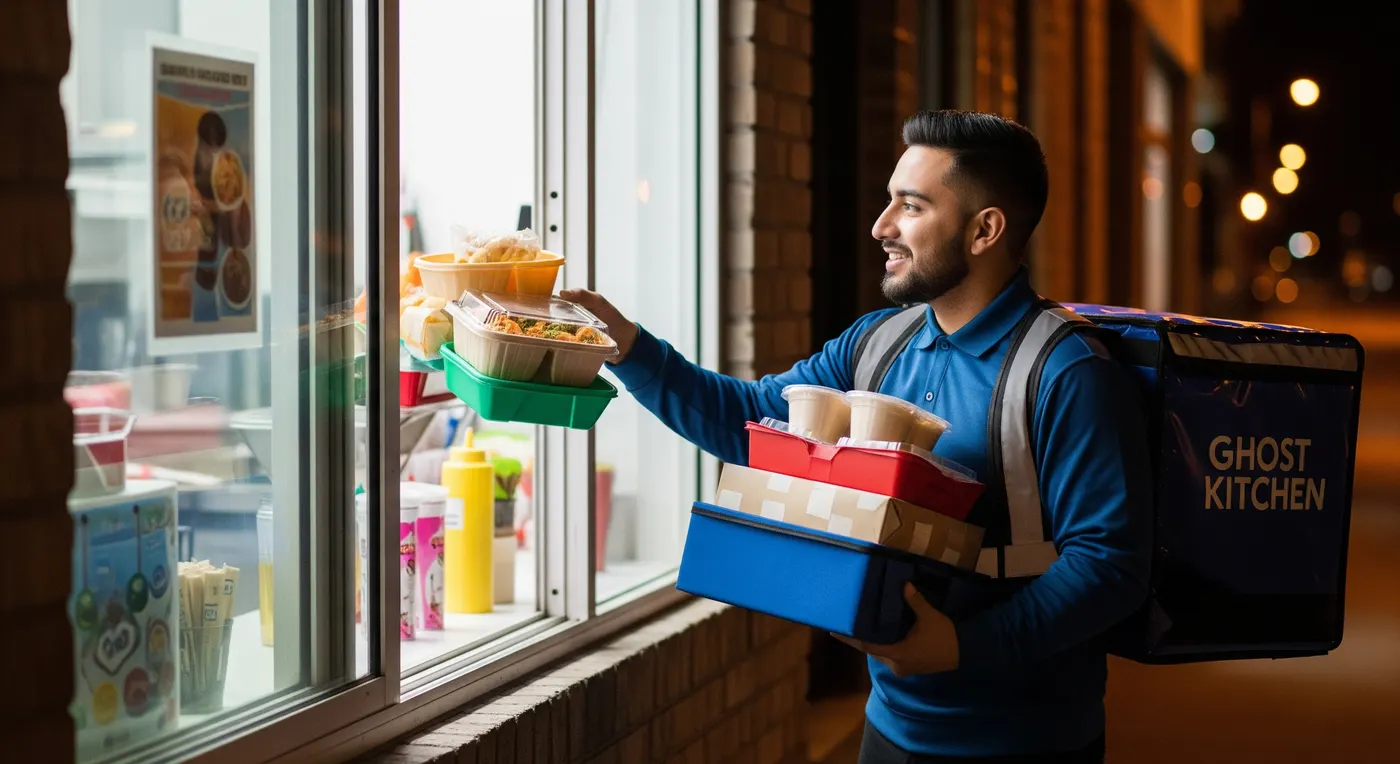
The exponential growth of the food delivery market has created a fertile ground for ghost kitchens and virtual brands. Consumers increasingly prioritize convenience and the ability to enjoy restaurant-quality meals in the comfort of their homes. By exclusively catering to delivery, these models can optimize their workflows, kitchen layouts, and packaging for speed and efficiency, bypassing the complexities of managing a dine-in experience.
3. Flexibility to Test Concepts and Scale Rapidly
The low overhead and agile nature of virtual brands make them ideal for culinary experimentation. Chefs and restaurateurs can test new cuisines, menu items, or brand concepts with minimal financial risk. If a concept proves successful, it can be scaled rapidly by launching in additional ghost kitchen locations. Conversely, underperforming concepts can be quickly retired or rebranded without the burden of a failing physical restaurant.
Practical Example: A chef passionate about fusion cuisine could launch a virtual brand specializing in Korean-Mexican tacos. If it gains traction, they can easily expand to other ghost kitchen facilities. If it doesn't, they can pivot to a different concept without significant losses.
4. Data-Driven Decision Making
Operating primarily through online platforms provides a wealth of data on customer preferences, popular menu items, peak ordering times, and geographic demand. This data can be analyzed to refine menus, optimize marketing strategies, and identify new market opportunities, leading to more informed and profitable business decisions.
Current Trends and Growth Projections
The ghost kitchen and virtual brand market is not just growing; it's evolving at a rapid pace, driven by technological innovation and shifting consumer expectations. Several key trends are shaping its future:
1. Continued Market Expansion
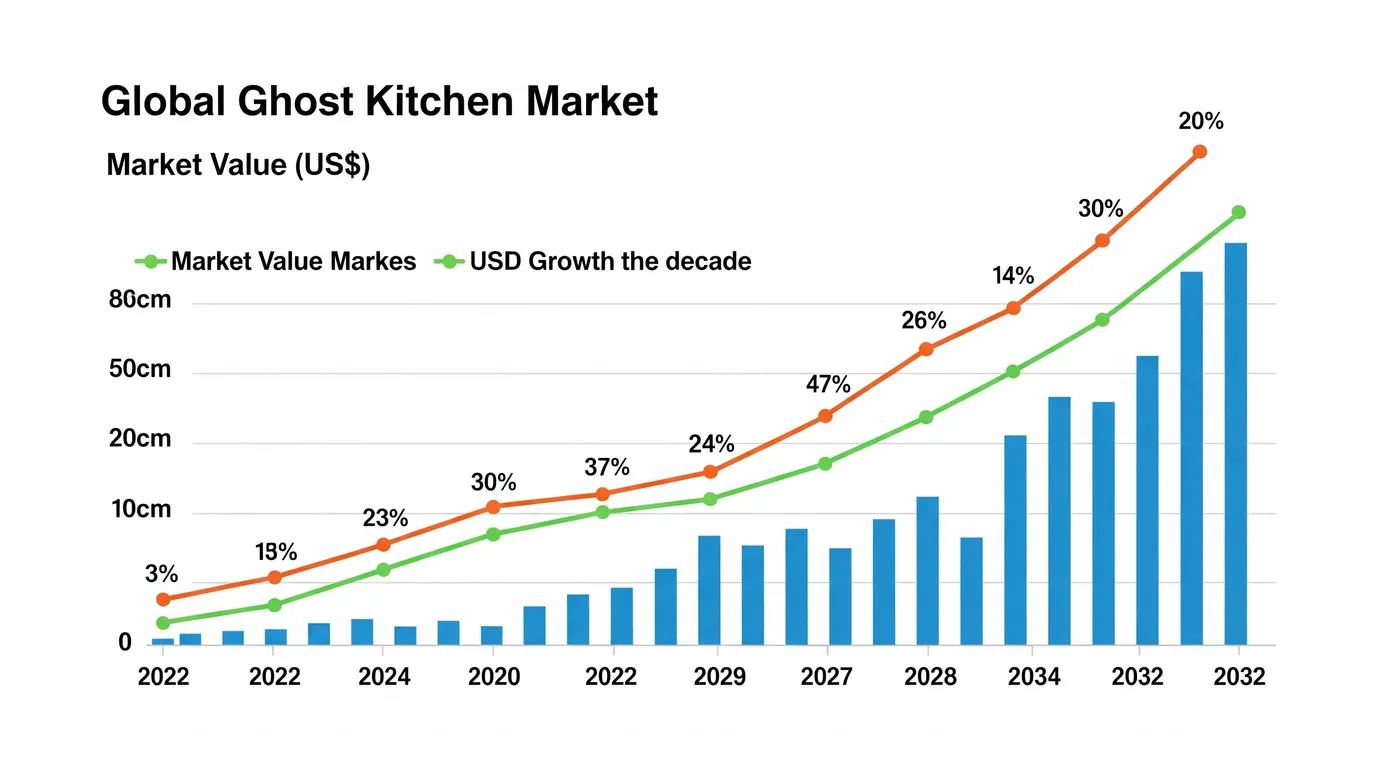
The global ghost kitchen market is projected for substantial growth. According to Statista, the global ghost kitchen market was valued at over $40 billion in 2022 and is expected to grow significantly [1].
Other sources indicate the market was worth around $58.61 billion in 2022 and is projected to reach approximately $177.85 billion by 2032 [2].
Virtuemarketresearch.com valued the global ghost kitchen market at USD 78.45 billion in 2025 and projects it to grow at a CAGR of 13.34%, reaching USD 147.32 billion by 2030 [3]. This growth is fueled by rising demand for online food delivery, convenience, and the inherent efficiencies of the model.
2. Diversification of Virtual Brand Offerings
Beyond traditional restaurant fare, virtual brands are expanding into niche markets, including healthy eating, dietary-specific menus (e.g., vegan, gluten-free), and specialized cuisines. This diversification caters to a broader range of consumer preferences and dietary needs.
3. Integration with Existing Restaurants
Many traditional restaurants are now embracing the virtual brand model, using their existing kitchens to launch delivery-only concepts. This allows them to maximize kitchen utilization, generate additional revenue streams, and reach new customer segments without significant additional investment.
4. Technological Advancements
Sophisticated software solutions are emerging to manage the complexities of multiple virtual brands, order aggregation, inventory management, and delivery logistics. These platforms are crucial for optimizing operations and ensuring seamless customer experiences.
5. Sustainability Focus
As the industry matures, there's a growing emphasis on sustainable practices, including eco-friendly packaging, reduced food waste, and optimized delivery routes to minimize carbon footprint.
Advantages and Challenges
While ghost kitchens and virtual brands offer significant opportunities, they also come with their own set of advantages and challenges that operators must navigate.
Advantages
Overhead choices: separating production from dine-in service changes the cost mix. Measure total space, equipment and labor for the proposed throughput before deciding that a shared or dedicated kitchen is cheaper.
Increased Efficiency and Specialization: By focusing solely on food preparation for delivery, ghost kitchens can streamline their operations, optimize kitchen layouts, and specialize in specific cuisines or menu items. This leads to faster order fulfillment and consistent food quality.
Flexibility and Agility: The virtual model allows for rapid adaptation to market trends and consumer demands. New menus or concepts can be launched quickly, tested, and iterated upon without the financial commitment of a traditional restaurant. This agility is crucial in the fast-paced food industry.
Wider Reach and Market Penetration: Without geographical limitations imposed by a physical storefront, virtual brands can serve a much broader customer base through various delivery platforms. This expands their potential market and revenue streams.
Lower Risk for Experimentation: The ability to launch and test new concepts with minimal investment significantly reduces the financial risk associated with culinary innovation. This encourages creativity and allows for quick pivots if a concept doesn't resonate with the market.
Optimized for Digital Engagement: Virtual brands are inherently designed for the digital age. Their success relies on strong online presence, effective digital marketing, and seamless integration with delivery platforms, pushing operators to excel in these areas.
Challenges
Third-party channel economics: marketplaces can bring discovery alongside their contracted fees and operating rules. Use the current agreement for the specific market and account, and include acquisition, fulfillment, refunds and customer-support work when comparing them with direct channels.
Lack of Brand Visibility and Customer Loyalty: Without a physical presence, building brand recognition and fostering customer loyalty can be more challenging. Virtual brands must rely heavily on digital marketing, strong online reviews, and consistent product quality to stand out in a crowded marketplace.
Operational Complexity: Managing multiple virtual brands from a single kitchen, coordinating with various delivery drivers, and handling a high volume of online orders can be operationally complex. Efficient systems for order management, inventory, and kitchen workflow are essential.
Quality Control and Consistency: Maintaining food quality and consistency during transit is a critical challenge. Packaging, delivery times, and driver handling can all impact the final product, affecting customer satisfaction and reviews.
Intense Competition: The low barrier to entry means the ghost kitchen and virtual brand space is becoming increasingly competitive. Standing out requires unique concepts, exceptional food, and effective marketing strategies.
Regulatory and Permitting Hurdles: Navigating local health and safety regulations, as well as permitting requirements for commissary kitchens, can be complex and vary by jurisdiction.
Customer Service Limitations: Direct customer interaction is minimal, making it harder to resolve issues in real-time or build personal relationships that often contribute to loyalty in traditional restaurants.
Evaluate the operating model with your own pilot
Compare three illustrative formats before copying another operator's expansion story:
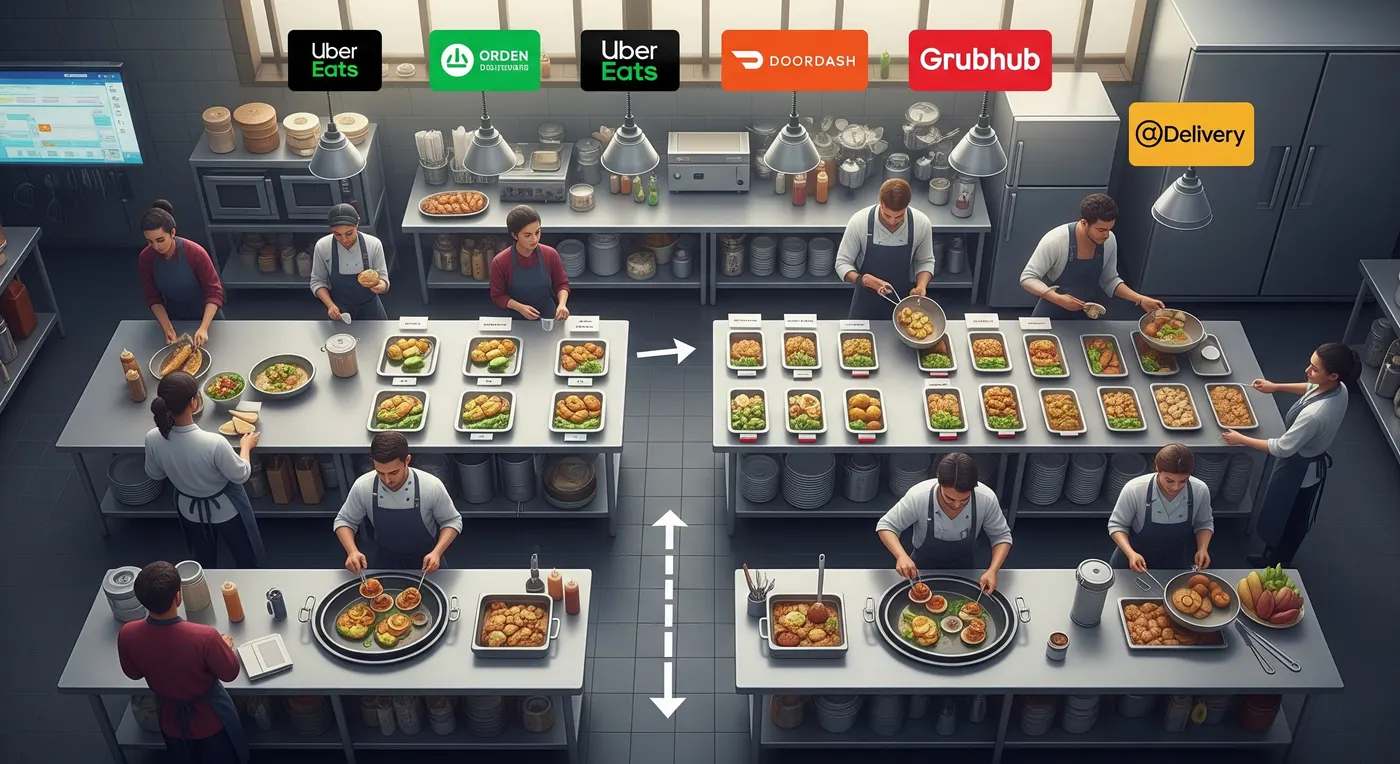
- An additional brand in an existing restaurant: measure whether its menu uses spare capacity or competes with the existing peak. Keep packaging, order identity and customer support distinct.
- Several brands in a shared facility: account for shared stations, storage, cleaning, packing and the courier collection point. Confirm which services the facility supplies and which each brand operates.
- A physical restaurant with a delivery-only concept: preserve the service promise of both channels. Measure preparation and handoff when dine-in and delivery orders arrive together.
Use your own pilot to judge demand, corrections, service time and contribution. A familiar brand name or another company's expansion does not establish that your menu and kitchen will produce the same result.
Simplifying Management with Technology Platforms: The Ordering.co Example
The complexity of managing multiple virtual brands, diverse menus, and a constant stream of delivery orders can be daunting. This is where specialized technology platforms become indispensable. Solutions like Ordering.co are designed to streamline the entire ecosystem of delivery-only dining, offering a comprehensive suite of tools that simplify operations for ghost kitchens and virtual brands.
Ordering.co, for instance, provides a robust platform that addresses several critical pain points:
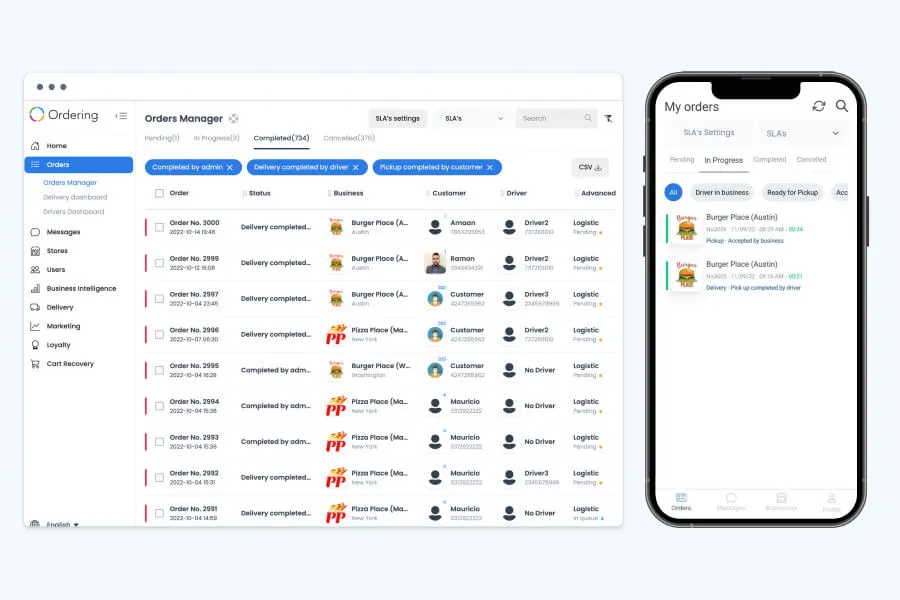
Connected order intake: Ordering.co brings orders from its own channels and configured marketplace connections into the merchant workflow. Confirm each account, store, territory and supported action before relying on consolidation or retiring native marketplace tools.
Multi-Brand Management: For ghost kitchens housing several virtual brands, the platform allows for seamless management of each brand's unique menu, pricing, and promotions from one central system. This ensures brand integrity and operational efficiency across all concepts.
Branded ordering channels: businesses can run their own ordering websites and customer apps. Direct customer relationships still need acquisition, service and a measured contribution model; the channel alone does not establish higher margins.
Integrated Delivery Logistics: Ordering.co can integrate with various delivery services, whether it's an in-house fleet, third-party logistics providers, or a hybrid model. This ensures efficient dispatching, tracking, and delivery of orders.
Data Analytics and Reporting: The platform provides valuable insights into sales performance, popular menu items, customer behavior, and operational efficiency. This data empowers businesses to make informed decisions, optimize their offerings, and identify growth opportunities.
Kitchen Display Systems (KDS): Digital kitchen display systems help streamline food preparation, ensuring that orders are prepared accurately and efficiently, reducing ticket times and improving workflow.
Customer Relationship Management (CRM): Tools for managing customer data, loyalty programs, and marketing campaigns help virtual brands build stronger relationships with their clientele, fostering repeat business and brand loyalty.
Ordering.co connects customer channels, merchant work and delivery for a configured multi-brand operation. Capacity, acquisition cost and contribution still need to be measured against the kitchen's actual service model.
Conclusion: The Reshaping of Dining
Ghost kitchens and virtual brands are not merely a fleeting trend; they represent a fundamental shift in the restaurant industry, driven by technological innovation, evolving consumer demands for convenience, and the pursuit of operational efficiency.
They offer a compelling model for culinary entrepreneurs and established restaurateurs alike to navigate the complexities of the modern food landscape.
From significantly lower operating costs and unparalleled flexibility to test new concepts, to the ability to scale rapidly and reach wider audiences, the advantages are clear.
While challenges such as reliance on third-party platforms and the need to build brand visibility in a digital-first world persist, the continuous evolution of technology platforms is providing robust solutions.
The future of dining is increasingly delivery-centric, and ghost kitchens and virtual brands are at the vanguard of this transformation. They are democratizing the restaurant business, allowing for more diverse culinary offerings and innovative approaches to food service. As technology continues to advance and consumer preferences solidify around convenience and digital engagement, these models are poised to become an even more integral part of our culinary ecosystem.
Ready to Transform Your Delivery Operations?
Discover how Ordering.co can simplify the management of your ghost kitchens and virtual brands, helping you optimize operations, reduce costs, and scale your business. Request a demo today and take the first step towards the future of delivery-only dining.
How to start: capacity and economics before another brand
Choose the model first: an owned virtual brand, a licensed concept or a franchise agreement carries different brand rights, operating duties and costs. A ghost kitchen describes the production format; it does not replace the terms of a franchise or prove demand for a menu.
| Space option | What to compare | Throughput risk |
|---|---|---|
| Existing restaurant kitchen | Spare hours/stations, lease permissions, labor and incremental utilities | Delivery work competes with dine-in peaks or the same fryer |
| Shared/commissary space | Rental inclusions, storage, cleaning, booking windows and courier access | Several brands need the same station or collection area |
| Dedicated delivery kitchen | Fit-out, rent, equipment, maintenance and permitted use | Fixed capacity costs continue when demand is low |
Co-location can reduce duplicated space, but it does not automatically reduce total cost or preserve throughput. Observe prep, packing and courier handoff together. Start with a menu that travels well and uses the proposed stations without displacing profitable existing service. Estimate demand by service area, opening hours, channel and testable acquisition plan.
Calculate contribution per completed order after food, packaging, variable labor, payment/channel charges, promotion, refunds and fulfillment. Compare fixed space/software costs separately. Pilot a limited menu and service window; record accepted orders, preparation and collection wait, waste, corrections and contribution. Expand only when the measured operation supports it, rather than assuming a delivery-only format is profitable.
Check premises and activity requirements with the relevant authorities before selling. The FDA food-business guide directs US operators to applicable federal, state and local requirements; GOV.UK's startup guidance describes the local-authority registration route in its jurisdiction. These sources, reviewed November 10, 2026, are starting points for the location and activity you actually operate, not a permit valid everywhere. Use the business launch guide for the jurisdiction checklist and the cloud-kitchen evaluation for technical capacity and integration scope. Review one brand and kitchen in a demo.