

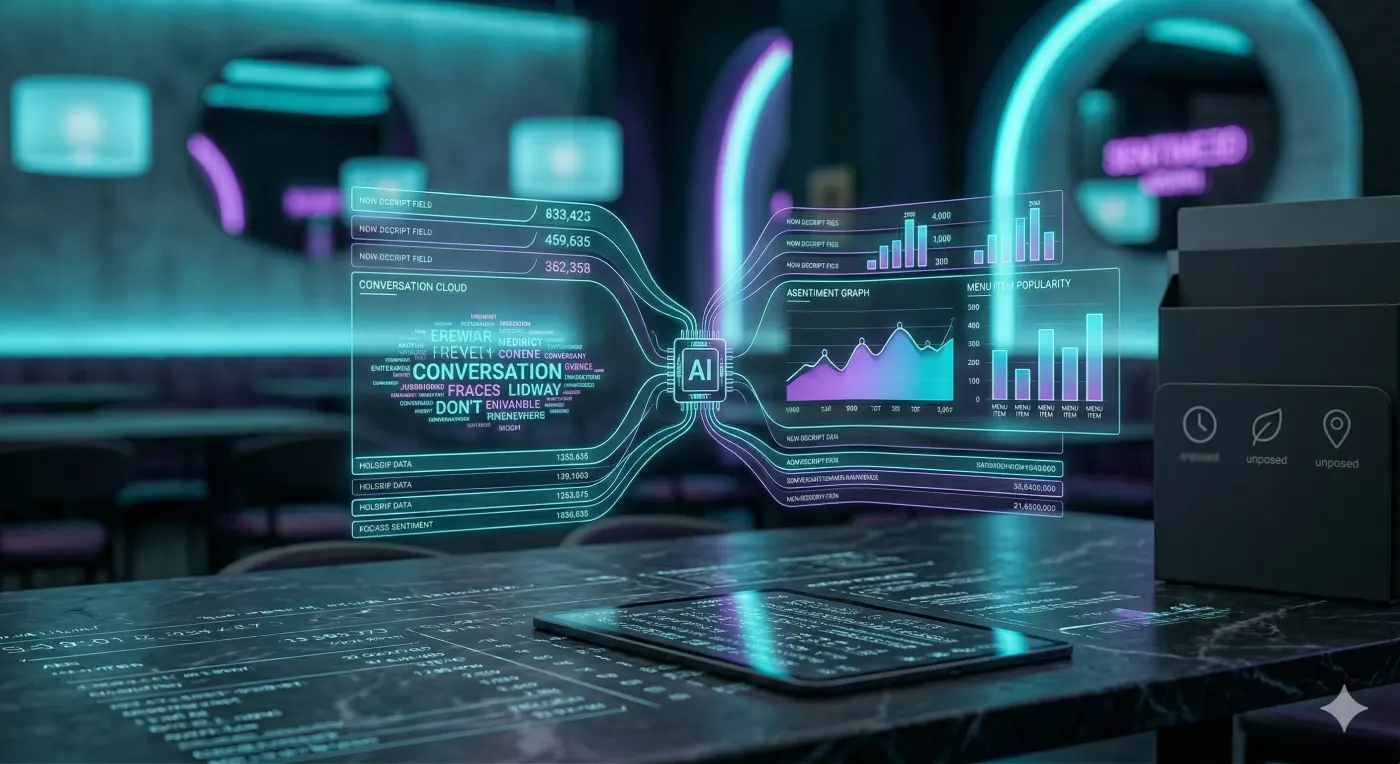
Every day, your chatbot handles hundreds of conversations. Hidden in those messages are the answers to questions you have been guessing at for years: which menu items excite customers, which ones confuse them, what they wish you offered, and why some never come back. The restaurants gaining 10-15% profit increases are not cooking better. They are listening better.
Your Chatbot Is Sitting on a Goldmine of Business Intelligence
Most restaurants treat chatbot conversations as transactions: take the order, confirm the reservation, answer the question, move on. But every conversation contains signals that traditional analytics cannot capture. A customer asking Do you have anything gluten-free besides the salad? is not just a menu inquiry. It is a data point revealing a gap between what you offer and what your customers want.
Sales data tells you what sold. Chat data tells you what almost sold, what customers wished you had, and what language makes them buy. That is the difference between looking in the rearview mirror and looking through the windshield.
- 10-15%
Profit increase from AI-driven menu optimization
- 15%
Repeat order increase from NLP feedback analysis
- 20%
Complaint reduction from conversation pattern mining
- 35%
Reduction in phone calls with chatbot analytics
5 Types of Intelligence Hiding in Your Chat Logs
Raw conversation data becomes actionable intelligence when you know what to look for. AI extracts five distinct categories of insight from every conversation, each feeding a different business decision.
Menu Intelligence
Which items generate the most questions. What customers ask for that you do not offer. Which descriptions confuse people. Where dietary gaps exist. Direct input for menu engineering.
Customer Language Patterns
How real customers describe your food, their needs, and their expectations. These exact phrases become your most effective marketing copy because they mirror how people actually think.
Price Sensitivity Signals
When customers ask Is there a cheaper option? or What are your combo deals? they reveal price elasticity data that no survey can match. Chat captures these signals at scale.
Competitive Intelligence
Customers compare you to competitors in chat: Do you have something like the burger at the place down the street? These mentions reveal exactly where you win, lose, and can differentiate.
Seasonal Demand Patterns
Chat volume and topics shift predictably with seasons, weather, and events. Cold soup inquiries in summer, comfort food in winter. These patterns inform menu rotation and marketing timing.
From Raw Conversations to Actionable Decisions
The gap between having data and using data is a structured analytics pipeline. AI transforms messy, unstructured conversation logs into clear narratives that answer three questions: what is happening, why is it happening, and what should we do about it.
The Conversation Intelligence Pipeline
How raw chat becomes strategic decisions
Collect Conversation Data
Every chatbot interaction is logged: questions asked, items discussed, sentiments expressed, preferences stated, objections raised, and outcomes achieved.
Apply NLP and Sentiment Analysis
AI classifies each conversation by topic, sentiment, and intent. Aspect-based analysis tags mentions of specific dishes, service elements, and pricing with positive, neutral, or negative sentiment.
Identify Patterns and Trends
Algorithms surface recurring themes: 47 customers asked about vegan options this month. Negative sentiment around delivery speed increased 15%. Birthday dinner inquiries spike in March.
Generate Actionable Insights
AI synthesizes patterns into recommendations: Add a vegan entree (high demand, zero supply). Improve delivery partner SLA. Launch birthday campaign in February.
Implement and Measure
Changes are made based on insights. The chatbot continues collecting data, enabling measurement of impact and continuous optimization.
Menu Engineering Powered by Conversation Data
Traditional menu engineering uses two dimensions: item popularity and item profitability. Chat data adds a critical third dimension: customer demand signals for items that do not exist yet. Sales data tells you what sold. Chat data tells you what should be on your menu but is not.
Chat-Powered Menu Intelligence Matrix
| Signal Type | What Chat Reveals | Menu Action | Expected Impact |
|---|---|---|---|
| High inquiry, low order | Customers ask about an item but rarely order it | Fix description, adjust price, or improve presentation | 10-20% conversion lift for that item |
| Repeated missing item requests | Multiple customers ask for something not on the menu | Add the item or a close alternative | New revenue stream from proven demand |
| Negative sentiment on specific dish | Customers mention cold, bland, or not as expected | Recipe adjustment, quality control review, or removal | Complaint reduction, rating improvement |
| Dietary restriction questions | Frequent asks about gluten-free, vegan, allergen info | Add clear dietary labeling and expand options | Capture underserved customer segment |
| Price comparison mentions | Customers reference competitor pricing or ask for deals | Review pricing strategy, add value bundles | Improved perceived value, reduced price objections |
| Ingredient curiosity | Questions about sourcing, freshness, or preparation method | Enhance descriptions with sourcing and preparation details | Premium positioning, willingness to pay more |
Marketing Messages Written by Your Customers
The most effective marketing copy does not come from a copywriter's imagination. It comes from the exact words your customers use to describe what they want. Chat logs are a library of customer language that reveals how people actually think about food, dining, and your restaurant.
Marketing Copy Transformation
From assumed messaging to customer-validated messaging
Marketer's Assumption
Enjoy our exquisite cuisine
Generic, aspirational language that sounds like every other restaurant
Fresh ingredients, expertly prepared
Vague claims that do not address what customers actually care about
The perfect dining experience
Undefined promise that sets no clear expectation
Order now for fast delivery
Focus on speed alone when customers care about other things too
Customer's Actual Language (from Chat)
The truffle burger that 200 people asked about this month
Specific, social-proof driven language from real customer interest data
Gluten-free options beyond just salad
Addresses the exact gap customers expressed frustration about in chat
Kids eat free before 6 PM, and they actually love the menu
Solves the specific concern families mentioned most in conversations
Hot food, at your door, with real-time tracking
Addresses the three concerns customers actually raised about delivery
Competitive Intelligence You Cannot Buy Anywhere Else
Market research firms charge thousands for competitive analysis. Your chatbot gives it to you for free. Every time a customer says How do you compare to the place down the street? or Do you have anything like their signature dish? they are handing you intelligence about what competitors do well and where you can differentiate.
Where You Win
Customers mention your strengths: Your pasta is way better than the Italian place on Main. Double down on what differentiates you.
Where You Lose
Customers reference competitor advantages: The other place has faster delivery or They have a bigger kids menu. Address these gaps.
Where You Can Differentiate
Customers ask for things neither you nor competitors offer: Does anyone around here do late-night sushi? First-mover opportunity.
How You Are Priced
Price comparison mentions reveal whether customers see you as premium, value, or overpriced relative to alternatives. Adjust positioning accordingly.
Building Your Conversation Analytics Dashboard
A conversation analytics dashboard tracks the signals that predict future performance, not just past results. Here are the metrics that matter across three decision areas.
Conversation Analytics Dashboard
Menu Signals
Item Inquiry Frequency
How often each menu item is asked about. High inquiry items deserve prominent placement and marketing attention.
Missing Item Requests
Items customers ask for that do not exist on your menu. Each request is a demand signal for menu expansion.
Sentiment by Dish
Average sentiment score for each menu item mentioned in conversations. Identifies loved items and problem items.
Marketing Signals
Customer Language Clusters
Most common phrases customers use to describe their needs. These become marketing headlines and ad copy.
Question Topic Trends
Rising and falling topics in customer conversations. Indicates shifting interests and emerging opportunities.
Competitor Mention Tracking
How often and in what context customers mention specific competitors. Reveals competitive positioning.
Operations Signals
Pain Point Frequency
Most common complaints or frustrations expressed in chat. Prioritize operational fixes by complaint volume.
Peak Question Topics by Daypart
What customers ask about varies by time of day. Breakfast questions differ from dinner questions. Staff accordingly.
Resolution Satisfaction
How satisfied customers are after their question is answered. Low satisfaction indicates knowledge gaps or process issues.
Ready to Turn Conversations into Competitive Advantage?
Let AI Mine Your Chat Data for Business Intelligence
Ordering.co AI analyzes every conversation for menu insights, marketing intelligence, and operational improvements. Data-driven decisions, zero guesswork.
Frequently Asked Questions
Chat analytics for restaurant marketing and menu optimization
What kind of insights can restaurants get from chatbot conversation data?
Chatbot conversations reveal five types of intelligence: menu demand signals (what customers ask for that you do not offer), customer language patterns (how they describe their needs), price sensitivity (hesitation and comparison signals), competitive intelligence (mentions of other restaurants), and seasonal demand patterns (topic shifts by time of year).
How does chat data improve menu engineering?
Traditional menu engineering uses sales and profitability data. Chat adds a third dimension: demand for items that do not exist yet. When 47 customers ask about vegan options you do not offer, that is proven demand before a single sale. AI-driven menu optimization from chat data increases profits by 10-15%.
Can conversation data really improve marketing copy?
Customer language from chat conversations outperforms assumed marketing copy because it mirrors how people actually think about food and dining. When customers repeatedly ask Is the truffle burger back? that exact phrase becomes a more effective headline than any creative brainstorm could produce.
How does sentiment analysis work on restaurant chat transcripts?
AI uses aspect-based sentiment analysis to tag mentions of specific dishes, service elements, and pricing as positive, neutral, or negative. This goes beyond overall sentiment to identify exactly which menu items delight customers and which need improvement, with the specific reasons why.
What competitive intelligence can restaurants extract from chat data?
Customers voluntarily compare you to competitors in conversations: How do you compare to the place down the street? or Do you have something like their signature dish? These mentions reveal where you win, where you lose, how you are priced relative to alternatives, and where market gaps exist.
How quickly can chat analytics improve restaurant performance?
Most restaurants see meaningful insights within the first month of analyzing conversation data. Menu optimization decisions typically show measurable profit impact within 60-90 days. The key advantage over traditional analytics is speed: AI enables daily analysis cycles instead of quarterly menu reviews.
What is the difference between sales data and chat data for restaurants?
Sales data shows what happened: which items sold, at what price, at what time. Chat data shows what almost happened: items customers asked about but did not order, concerns that prevented purchases, competitor comparisons, dietary needs not met, and unmet demand for items not on the menu.
Do small restaurants have enough conversation data for meaningful analytics?
Even 50-100 conversations per week generate actionable patterns. AI identifies trends from smaller datasets by detecting recurring themes, sentiment patterns, and demand signals. Small restaurants often gain disproportionate value because they have more menu flexibility and can act on insights faster than chains.
Your Conversations Already Contain the Answers. AI Extracts Them.
Turn every chat into a data point that improves your menu, marketing, and margins.