

A delivery menu should help a first-time customer understand the offer and complete an order without unnecessary decisions. Use this audit as a heuristic, then validate changes with your own customers and order data.
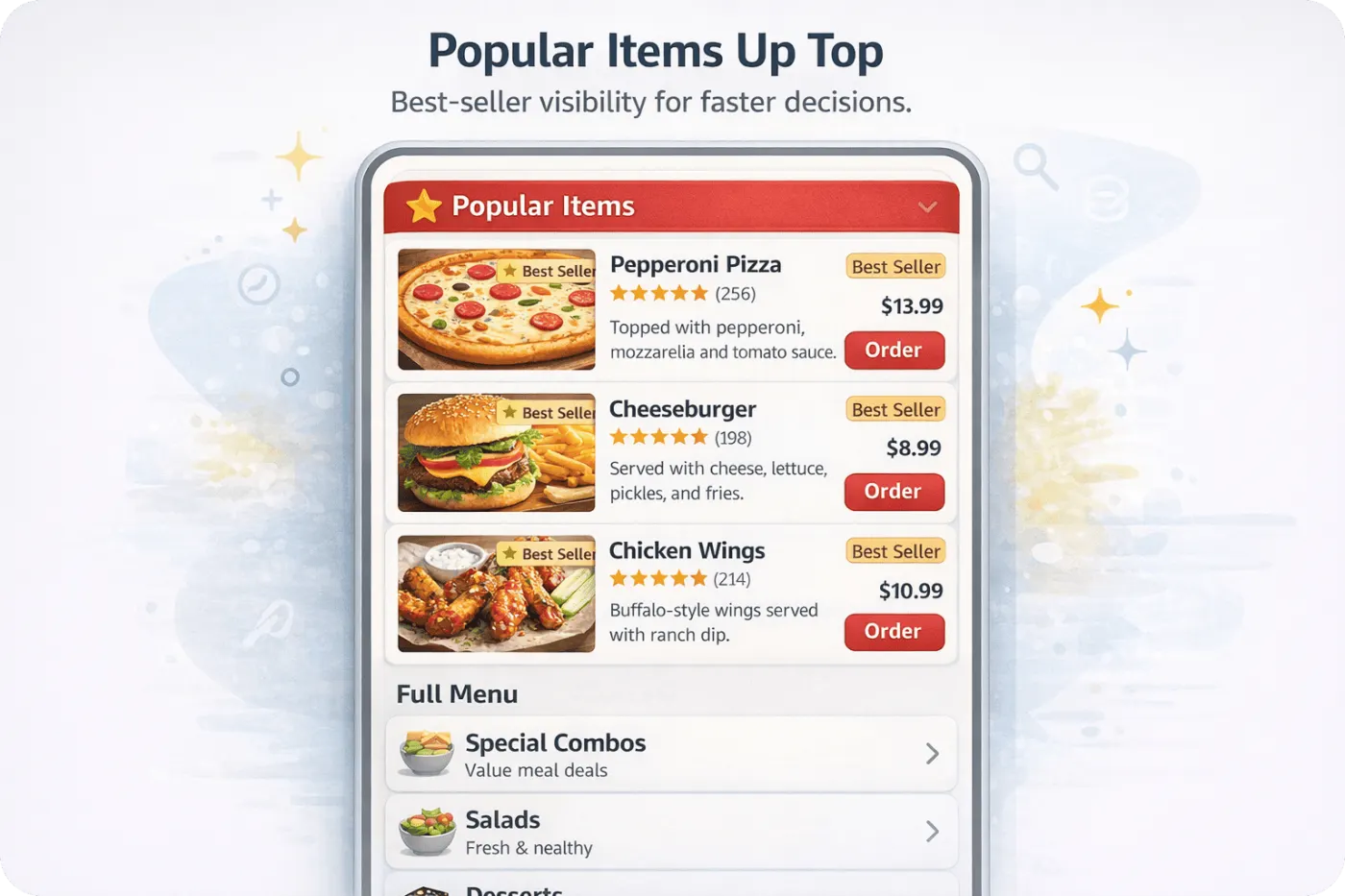
1. Best-seller visibility
Check whether representative and frequently ordered items are easy to find near the start of the menu. Use clear labels grounded in actual sales data rather than an unsupported popularity claim.
2. Category clarity
Organize categories around how customers choose: for example popular items, meals, sides, drinks, and desserts. The right structure depends on the menu; avoid exposing internal kitchen taxonomy when it does not help ordering.
3. Modifier friction
- Keep required choices necessary and clearly labeled
- Provide safe defaults only when they reflect the order
- Group size, protein, preparation, and sauce logically
- Explain price changes before the customer confirms
- Test keyboard, touch, screen reader, and error recovery
4. Bundles and add-ons
Offer relevant combinations and optional additions at the point they make sense. Limit the initial choice, show what is included, and measure attachment and margin rather than assuming an uplift.
5. Checkout path
Count the steps from item selection to payment, identify repeated confirmation and surprise charges, and preserve a clear way back to the cart. Test delivery, pickup, scheduled orders, coupons, payment failure, and unavailable items.
A 3–3–3 experiment
One possible experiment is to lead with three representative items, three bundles, and three relevant add-ons. It is not a benchmark: compare it with the current menu using a defined period and the same traffic conditions.
Naming and photography
Prefer names that explain the item. Prioritize consistent, accurate photography for the items where imagery helps a customer decide, and provide useful alternative text without repeating nearby copy.
Score the evidence
- Visibility and comprehension
- Modifier completion and error
- Cart and checkout completion
- Bundle and add-on attachment
- Refunds, substitutions, and support
- Performance by device, channel, and location