

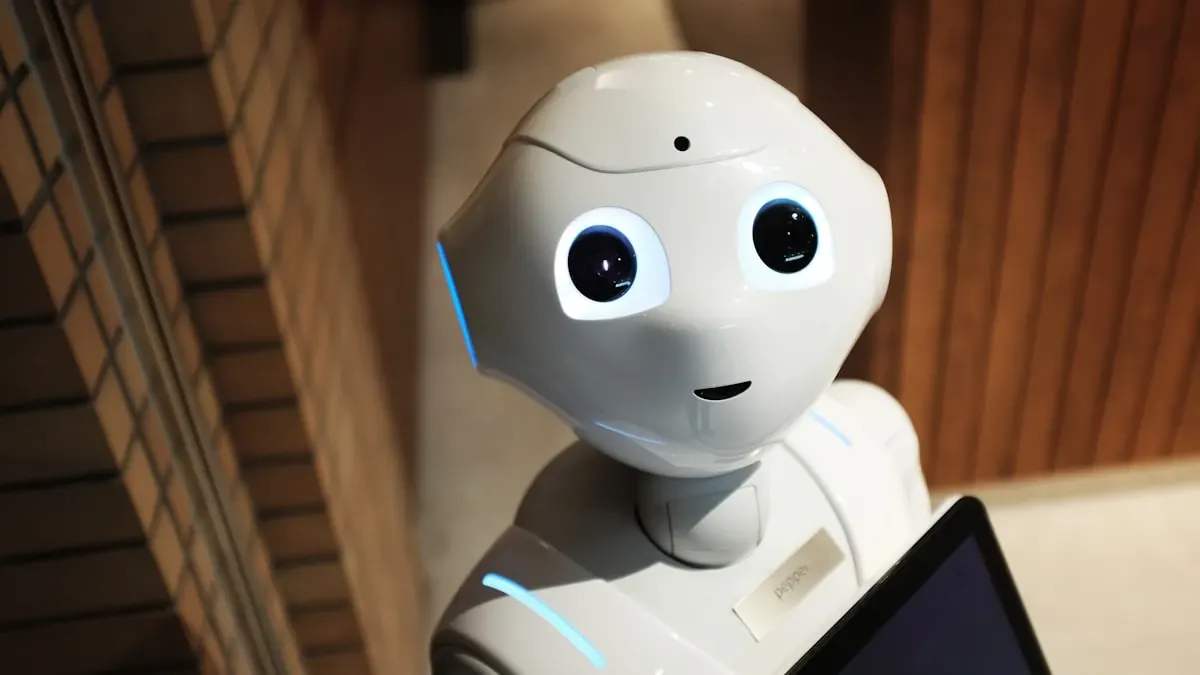
Restaurant Ordering Has Changed More in 5 Years Than in the Previous 50
Think about how you ordered food a decade ago. You called the restaurant, waited on hold, and hoped someone wrote your order down correctly. Today, customers place orders through phone calls, online forms, mobile apps, and now AI-powered chat. The pace of change is accelerating, and the question on every restaurant owner's mind is the same: will chatbots become the new waitstaff?
The answer, as we will explore in this article, is nuanced. This is not about replacing humans. It is about augmenting the dining experience so that technology handles what it does best while humans focus on what they do best. If you are a restaurant owner planning for the next 3-5 years, this breakdown is essential reading.
The Evolution of Restaurant Ordering
1990s
Phone-Only Era
Customers called in, lines were busy during peak hours, orders were lost or misheard regularly.
2000s
Online Forms & Websites
First web ordering portals appeared with clunky interfaces, desktop-only, limited adoption.
2010s
Mobile Apps Take Over
Uber Eats, DoorDash, and dedicated restaurant apps emerged -- along with steep commission fees.
2020s
Chat-Based Ordering
WhatsApp, Instagram DM, and messaging platforms became legitimate ordering channels.
2025+
AI-Powered Conversations
Intelligent chatbots understand natural language, menus, preferences, and context.
What Restaurant Chatbots Can Do Today
Modern AI chatbots go far beyond scripted menu trees. They use natural language understanding to process complex orders, handle dietary restrictions, suggest pairings, and complete transactions -- all with 24/7 availability and sub-30-second response times. Here is what a real AI ordering conversation looks like.
AI Ordering in Action
Notice how the AI handled dietary restrictions, wine pairings, and a complex group order in under two minutes. This level of conversational intelligence was impossible with rule-based bots even two years ago. Today, it is standard for well-trained AI ordering agents.
- 73%
of consumers prefer messaging over calling a restaurant
- 28 sec
average AI chatbot response time
- 24/7
availability without additional staffing costs
- 40%+
of restaurant orders now originate from digital channels
The Next 2-5 Years: What Is Coming
Current chatbots are impressive, but the next wave will be transformative. Expect predictive ordering, voice integration, and cross-platform memory. Chatbots will remember your preferences across visits, predict your Friday night order before you ask, and seamlessly integrate with loyalty programs to offer personalized rewards in real time.
Restaurant Ordering: Today vs 2028
How AI capabilities are evolving
Today (2025)
Text-based ordering
AI handles orders through messaging apps with typed conversations
Menu-aware responses
Chatbot knows your menu, prices, and basic availability
Reactive ordering
Customer initiates, AI responds and processes the order
Near Future (2028)
Voice + text + visual ordering
Customers order by voice note, photo of a dish they want, or text -- all in one conversation
Predictive suggestions
AI knows you order pad thai every Friday and proactively suggests it at 5 PM
Proactive engagement
AI detects weather, events, and patterns to send personalized offers at the right moment
The Human Element: What Chatbots Cannot Replace
For all their speed and consistency, chatbots lack the qualities that make hospitality special: empathy, complex problem resolution, and the warmth of genuine human connection. A birthday celebration, a nervous first date, or a frustrated customer who received the wrong order -- these moments need a human who can read the room, adapt their tone, and make someone feel heard.
Where Each Excels: Chatbots vs Humans
Understanding the natural strengths of each
Chatbots Excel At
Efficiency and consistency
Speed and consistency
Sub-30-second responses, every time, no fatigue, no bad days
24/7 availability
Handles orders at 2 AM, on holidays, during staff shortages
Data collection
Tracks every preference, allergen, and ordering pattern automatically
Repetitive tasks
Takes the same order type for the 500th time with zero errors
Humans Excel At
Empathy and complexity
Emotional intelligence
Reads frustration, celebrates occasions, adapts tone to the moment
Complex problem solving
Handles a table of 20 with 7 dietary restrictions and a cake surprise
Ambiance and hospitality
Creates the memorable dining experience that earns loyalty and reviews
Relationship building
Remembers faces, tells stories, makes regulars feel like family
The Hybrid Model: Chatbots and Humans Working Together
The most realistic and effective future is not an either/or scenario. It is not replacement, but reallocation. Chatbots handle the high-volume, low-complexity tasks -- taking orders, answering FAQs, processing payments -- while staff focus on the high-value interactions that build loyalty and create memorable experiences.
Chatbot Handles
Taking standard orders, answering FAQs, processing payments, sending confirmations, upselling based on data, and managing delivery logistics.
Staff Handles
Greeting dine-in guests, handling complaints, curating special events, wine recommendations, and building personal rapport.
Seamless Handoff
When a customer needs help beyond the chatbot's scope, the conversation transfers to a human with full context -- no repetition needed.
Shared Intelligence
AI feeds customer insights to staff in real time: allergies, preferences, visit history, and spending patterns.
The result? Staff satisfaction increases because repetitive tasks are removed from their plate. Customers get faster ordering and better hospitality. And the restaurant captures more revenue with fewer operational headaches. This is not a futuristic vision -- the hybrid model is deployable today.
The future of restaurant service is not a choice between technology and humanity. It is technology enabling humanity to do what it does best.
Customer Preferences: The Generational Divide
Not all customers want the same ordering experience. Gen Z and Millennials overwhelmingly prefer chat-first interactions -- they grew up messaging and find phone calls uncomfortable. Meanwhile, Baby Boomers often prefer speaking to a real person and value the personal connection. The restaurant of the future must serve both preferences seamlessly.
How Generations Prefer to Order
TRADITIONAL PREFERENCE
- Phone calls to place orders
- Speaking to a person for recommendations
- Paper menus and in-person interaction
- Established habits with familiar restaurants
DIGITAL PREFERENCE
- Messaging apps for ordering (WhatsApp, Instagram)
- AI-powered suggestions based on mood and history
- Browsing digital menus with photos and reviews
- Trying new restaurants discovered through social platforms
Debunking Common Fears About Restaurant Chatbots
Change breeds uncertainty, and restaurant chatbots are no exception. But in this case, fear often outpaces reality. Let us address the most common concerns head-on.
Restaurant Chatbot Myths vs Reality
Myth: Chatbots will eliminate all restaurant jobs
Reality: Chatbots automate repetitive ordering tasks, freeing staff for higher-value hospitality roles. Restaurants using AI typically redeploy staff, not replace them.
Myth: Customers hate talking to bots
Reality: Over 70% of consumers now prefer messaging for simple transactions. The key is quality: well-designed AI agents feel natural and helpful.
Myth: AI cannot handle complex food orders
Reality: Modern AI agents understand dietary restrictions, modifications, group orders, and pairing suggestions faster and more accurately than manual methods.
Myth: Only big chains can afford AI ordering
Reality: Cloud-based AI solutions are designed for independent restaurants. Setup takes minutes, not months, and pricing scales with your business.
Myth: Chatbots make the dining experience feel cold
Reality: Chatbots handle the transactional layer so your human team can focus entirely on creating warm, memorable in-person experiences.
Ethical Considerations: Jobs, Privacy, and Experience
NIST's AI Risk Management Framework gives organizations a voluntary, rights-preserving approach for managing AI risks and promoting trustworthy, responsible AI use. Restaurants that embrace AI ordering have a responsibility to retrain staff for higher-value roles, not simply cut positions.
On the data side, chatbot ordering collects valuable customer information that must be handled with transparent data practices and customer control over their information. Choose providers that offer clear consent mechanisms, secure storage, and easy opt-out options.
What Restaurants Should Do Now to Prepare
The technology is mature enough to deploy today with measurable ROI. Early adopters are already building their data foundations and training their teams. Every month you wait is a month of missed orders and lost competitive advantage.
Action Plan
6 Steps to Prepare Your Restaurant for AI Ordering
Start today, see results this month
Audit your current ordering channels
Map every way customers order from you: phone, website, apps, messaging, walk-in. Identify where you lose orders.
Digitize your complete menu
Ensure your menu is digital, structured, and includes allergen information, modification options, and accurate pricing.
Calculate your ordering gap
Track how many messages go unanswered during peak hours. Multiply by your average order value to see the revenue AI can recover.
Test an AI ordering solution
Start with one channel like WhatsApp and one location. Run a 30-day pilot to measure real impact.
Train your team on the hybrid model
Help staff understand AI handles repetitive work so they can focus on hospitality. Define clear handoff protocols.
Measure and expand
Track response times, order completion rates, and revenue changes. Use data to justify expanding to more channels.
See It in Action
Ready to Explore AI Ordering for Your Restaurant?
Ordering.co helps restaurants capture every order through intelligent AI chat agents on WhatsApp and other channels. No app downloads needed.
The Verdict: Chatbots as the New Waitstaff?
So will chatbots become the new waitstaff? The answer is: not replacement -- collaboration. Chatbots become the new ordering layer -- fast, consistent, always available. Waitstaff become the hospitality layer -- warm, adaptive, irreplaceable. Together, they create an experience better than either could deliver alone.
The future is not binary. It is a spectrum where each restaurant finds its own balance of AI and human service. But one thing is certain: the restaurants that win will be those that embrace both.
Frequently Asked Questions
Common questions about AI chatbots in restaurant ordering
Will AI chatbots completely replace restaurant waitstaff?
No, AI chatbots will not replace waitstaff entirely. They automate repetitive ordering and transactional tasks, allowing human staff to focus on hospitality, complex situations, and creating memorable dining experiences. The most effective model is hybrid: chatbots for ordering efficiency, humans for emotional intelligence.
What tasks can restaurant chatbots handle right now?
Modern AI chatbots handle standard ordering, menu questions, dietary restriction filtering, upselling, payment processing, delivery tracking, and reservation confirmations. They operate 24/7 with sub-30-second response times and maintain consistency regardless of peak-hour volume.
Are customers comfortable ordering food from a chatbot?
Yes, the majority of consumers now prefer messaging for simple transactions. Over 70% of diners under 45 report preferring chat-based ordering over phone calls. The key factor is quality: well-designed AI agents that understand natural language feel helpful, not frustrating.
How much does AI ordering cost for a small restaurant?
Cloud-based AI ordering solutions are designed to be accessible for independent restaurants. Solutions like Ordering.co offer scalable pricing that adjusts to your order volume, with setup that takes minutes rather than months. Most restaurants see positive ROI within the first month.
What happens when a chatbot cannot handle a customer request?
Well-designed AI systems include seamless handoff protocols. When a conversation exceeds the chatbot's capabilities, it transfers to a human agent with full conversation context, so the customer never has to repeat themselves.
Is my customer data safe with AI ordering systems?
Reputable AI ordering platforms implement encryption, secure data storage, and clear consent mechanisms. Choose providers that are transparent about data handling, offer customer opt-out options, and comply with privacy regulations.
How long does it take to set up AI ordering for my restaurant?
Most modern AI ordering solutions can be configured in under an hour. You upload your menu, set your delivery parameters, and the AI begins handling conversations immediately. Fine-tuning happens over the first few days.
What should I look for when choosing an AI ordering solution?
Prioritize natural language understanding, multi-language support, seamless human handoff, integration with your existing POS system, transparent pricing, and strong data privacy practices. Avoid solutions that rely on rigid scripted flows.
Start Capturing Every Order Today
See how Ordering.co AI chat agents can transform your restaurant ordering in minutes.