

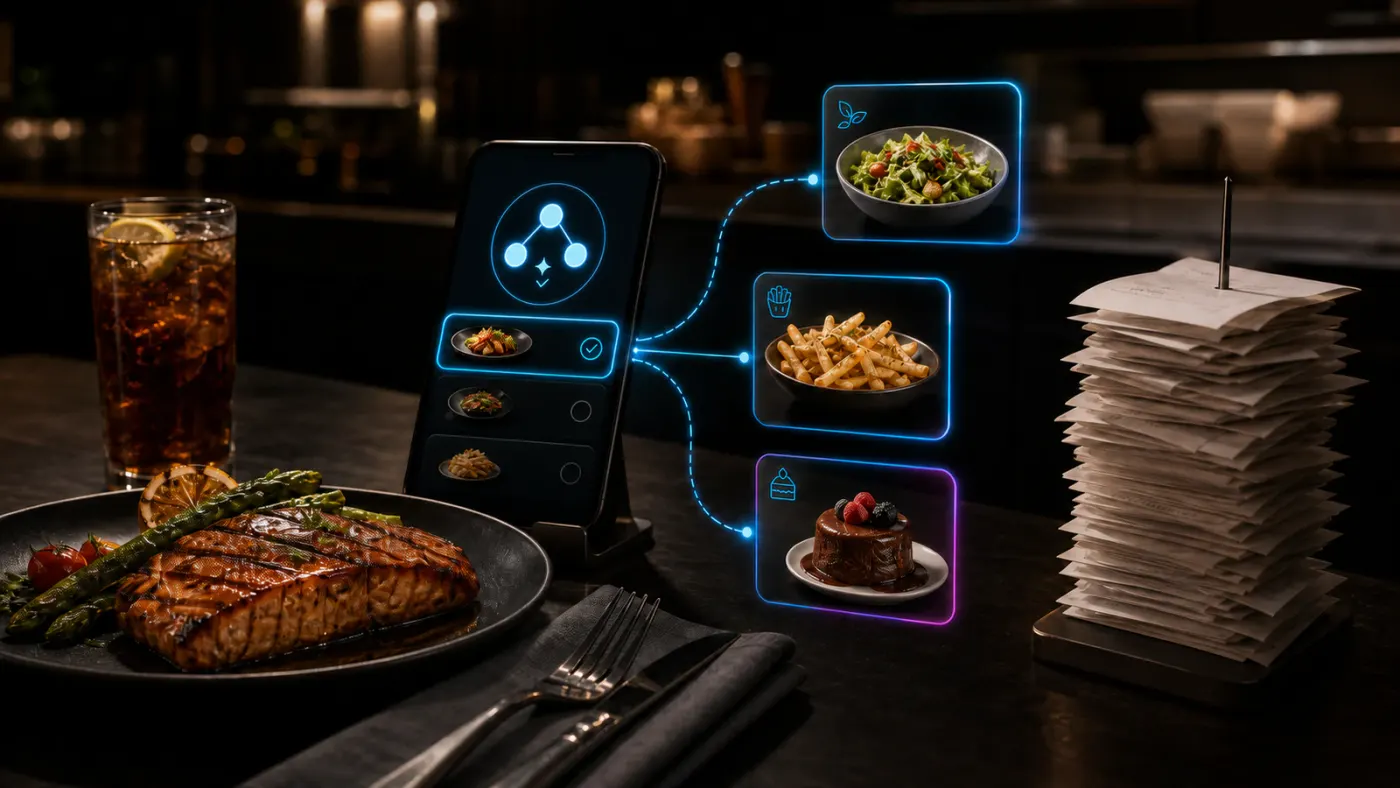
Every restaurant leaves money on the table. Not because the food is wrong or the service is bad, but because upselling is hard to do consistently. Your best server might suggest dessert to every table, but your newest hire forgets. During the dinner rush, nobody has time to recommend the premium sides. And on the phone, upselling feels awkward and rushed. The result is thousands of dollars in missed revenue every month from orders that could have been just a little bigger.
AI chatbots change this equation entirely. They are the sales assistant who never forgets, never rushes, and never feels awkward suggesting an add-on. Every single order gets a perfectly timed, contextually relevant upsell suggestion. The impact on average order value is measurable from day one, and it compounds with every conversation as the AI learns what your customers actually want.
- 10-30%
average increase in order value when AI upselling is implemented
- 70%
of customers accept a relevant add-on suggestion during chatbot ordering
- 4.5x
more consistent upselling rate compared to human staff during peak hours
Understanding Average Order Value in Food Service
Average order value is the single most important metric that most restaurants ignore. It measures the average dollar amount spent per order. A restaurant doing 100 orders per day at $22 AOV generates $2,200 daily. Increase that AOV by just $4 and you are looking at $2,600 per day, an extra $12,000 per month, without acquiring a single new customer. That is the power of AOV optimization.
The challenge is that humans are inconsistent upsellers. A server who just got a difficult table is not going to enthusiastically recommend the appetizer sampler to the next guest. A phone order taker handling five calls simultaneously will skip the drink suggestion. And nobody is upselling at 11 PM when the restaurant is closed but customers are still browsing your menu online. These gaps represent a massive revenue leak that most restaurants accept as inevitable. It is not.
| Current average order value | $22 |
|---|---|
| Target AOV increase per order | $4 |
| Orders per day | 100 |
| Operating days per month | 30 |
| Additional Monthly Revenue from AOV Lift | $12,000 |
Extra revenue without acquiring a single new customer, just by making each order slightly bigger | |
How AI Chatbots Drive Upselling and Cross-Selling
The secret to effective upselling is timing and relevance. A chatbot waits until the customer has committed to their main item, then presents a complementary suggestion at exactly the right moment. Ordering a pizza? Right after size selection, the chatbot suggests garlic bread and a drink bundle for just $3 more. The suggestion feels helpful rather than pushy because it is contextual and well-timed.
This is fundamentally different from generic upselling like asking every customer if they want to supersize. AI chatbots analyze what is in the cart and make intelligent suggestions based on what actually pairs well, what other customers commonly add, and what the current promotions are. A customer ordering a salad gets a different suggestion than one ordering a burger. That contextual intelligence is what drives acceptance rates above 70% for well-implemented chatbot upselling.
Natural Upselling in Action
5 Proven Chatbot Upselling Strategies for Restaurants
1. Combo and Bundle Suggestions
Bundles work because they offer perceived value. When a chatbot presents a combo that saves the customer $2-3 compared to ordering items separately, the upgrade feels like a smart decision rather than an upsell. The key is designing bundles around your most popular items and pricing them to feel like a genuine deal while still increasing your margin per order.
2. Size Upgrades at the Right Moment
Size upgrades are the simplest upsell with the highest acceptance rate. When someone orders a medium pizza, the chatbot can mention that the large is only $3 more and feeds two extra people. The incremental cost to the customer is small, but the revenue impact across hundreds of orders is substantial. Timing matters: the suggestion works best immediately after item selection, before the customer has mentally anchored on a total.
3. Add-On Recommendations Based on Order Context
Context-aware add-ons are where AI truly shines. The chatbot knows that customers who order pasta frequently add garlic bread. It knows that wing orders pair well with ranch and blue cheese dips. It knows that family-size orders often include dessert. These data-driven suggestions feel like helpful reminders rather than sales pitches, which is exactly why they convert so well.
4. Time-Based and Seasonal Promotions
AI chatbots can trigger different upsell offers based on time of day, day of week, or season. A Friday evening order gets a dessert promotion. A Tuesday lunch order gets a combo deal. During summer, the chatbot pushes cold drinks and smoothies. During winter, it highlights soups and warm beverages. This dynamic approach keeps suggestions fresh and relevant, preventing the fatigue that comes from hearing the same upsell every time.
5. Loyalty-Driven Personalized Offers
Returning customers get the most powerful upsell of all: personalization. The chatbot remembers that you tried the spicy wings last time and loved them, so it suggests the new ghost pepper flavor. It knows your family usually orders four meals, so it offers the family bundle at a loyalty discount. This level of personalization makes the customer feel known, not sold to, which is the holy grail of upselling.
Combo Bundles
Pair popular items into value meals that save customers money while increasing your average order total
Size Upgrades
Suggest larger portions at a small incremental cost right after item selection for maximum acceptance
Contextual Add-Ons
Recommend sides, dips, and extras that pair naturally with what the customer already ordered
Time-Based Promotions
Trigger seasonal, daily, and time-of-day specific offers that keep suggestions fresh and relevant
Loyalty Personalization
Use order history to craft individualized suggestions that feel like recommendations from a friend
Why Chatbots Outperform Traditional Upselling
The gap between human and AI upselling is not about intelligence. It is about consistency. Your best server on their best day might upsell on 80% of tables. But across your entire team, across every shift, across phone orders and walk-ins and online orders, the average upsell rate drops dramatically. AI chatbots maintain peak performance on every single interaction, which is why the aggregate revenue impact is so much larger than what even excellent human upselling achieves.
Traditional Upselling vs AI Chatbot Upselling
Why consistency wins
Staff Upselling
Inconsistent execution
Upselling drops to near zero during peak hours when staff is overwhelmed and rushing
Fatigue and forgetfulness
After hours on shift, even great servers forget to suggest add-ons and upgrades
Generic suggestions
Staff typically uses the same upsell for every customer regardless of what they ordered
Zero after-hours coverage
No upselling happens on phone orders after close or on unmonitored digital channels
AI Chatbot Upselling
100% execution rate
Every single order receives a relevant upsell suggestion, regardless of how busy the restaurant is
Never tires or forgets
The AI maintains peak upselling performance on order 1 and order 1,000 identically
Contextual intelligence
Suggestions are tailored to each order based on items, history, time, and conversion data
24/7 revenue optimization
Upselling continues on every channel at every hour, including late-night and early-morning orders
Using Data to Optimize Your Upselling Strategy
One of the most powerful advantages of chatbot upselling is that every suggestion generates data. You can see exactly which upsells are accepted, which are ignored, and which cause customers to abandon the order entirely. This feedback loop lets you continuously refine your strategy. If suggesting garlic bread converts at 45% but suggesting salad converts at 8%, the AI automatically prioritizes garlic bread.
Advanced chatbot platforms let you A/B test different upsell approaches. Try two different phrasings for the same suggestion and see which converts better. Test whether a percentage discount outperforms a dollar discount. Experiment with suggesting the upsell before versus after order confirmation. This data-driven optimization is impossible with human upselling and it is what separates mediocre results from exceptional ones.
Conversion Tracking
Monitor acceptance rates for every upsell suggestion to identify your highest-performing recommendations.
A/B Testing
Test different phrasings, timing, and offer structures to find the combination that maximizes conversions.
Auto-Optimization
The AI automatically shifts toward higher-converting suggestions and phases out underperformers.
Trend Analysis
Spot seasonal patterns in upsell acceptance to proactively adjust your strategy before revenue dips.
The Psychology Behind Effective AI Upselling
The reason chatbot upselling works so well is psychological. In a conversation, a suggestion feels like advice from a friend rather than a sales pitch from a corporation. The chatbot does not say 'Would you like to add our premium garlic bread for $4.99?' It says 'Most customers who order the pasta add garlic bread. Want me to add it?' That social proof framing transforms a price objection into a fear of missing out.
Anchoring is another powerful tool. When the chatbot shows the combo price next to the individual price, the savings become the focus rather than the total. Scarcity works too: limited-time seasonal items create urgency that drives impulse additions. And reciprocity plays a role when the chatbot offers a small discount on the add-on, making the customer feel like they are getting special treatment rather than being upsold.
Measuring the Impact: Key Metrics to Track
To know if your chatbot upselling strategy is working, you need to track the right metrics. Average order value is the headline number, but it does not tell the whole story. You also need to understand acceptance rates, revenue per conversation, and whether upselling is affecting customer satisfaction or repeat purchase rates.
Essential Upselling KPIs
| Metric | What It Measures | Benchmark |
|---|---|---|
| Average Order Value (AOV) | Mean spend per order across all channels | $22-35 for casual dining |
| Upsell Acceptance Rate | Percentage of customers who accept an upsell suggestion | 25-40% is strong |
| Revenue Per Conversation | Total revenue generated per chatbot interaction | Track trend over time |
| AOV Lift Percentage | Percentage increase in AOV attributable to chatbot suggestions | 10-30% is typical |
| Cart Abandonment Rate | Orders abandoned after an upsell suggestion is presented | Below 5% is healthy |
| Repeat Order Rate | How often upsell customers return vs non-upsell customers | Should be equal or higher |
Getting Started with Chatbot-Driven Upselling
You do not need to overhaul your entire operation to start benefiting from AI upselling. The most effective approach is to start simple, measure results, and expand based on what the data tells you. Here is a practical roadmap to get your first upselling chatbot live and generating revenue.
Quick Start
Launch Chatbot Upselling in 4 Steps
From zero to revenue in under a week
Define your top 5 upsell pairs
Identify your best-selling items and the add-ons that pair naturally. Start with combos, size upgrades, and popular sides.
Configure upsell triggers and timing
Set when each suggestion appears in the ordering flow. The sweet spot is right after the main item is confirmed but before the order total.
Write conversational suggestion copy
Craft upsell messages that feel helpful, not salesy. Use social proof, savings framing, and genuine recommendations.
Launch, measure, and iterate
Go live, track acceptance rates for each upsell, and optimize weekly. Double down on what works, drop what does not.
Frequently Asked Questions About Chatbot Upselling
Everything restaurant operators need to know about AI-driven revenue optimization
How much can AI chatbot upselling increase my restaurant revenue?
Most restaurants see a 10-30% increase in average order value after implementing AI chatbot upselling. For a restaurant processing 100 orders per day at $22 average, even a $4 AOV lift translates to approximately $12,000 in additional monthly revenue.
Will customers find chatbot upselling annoying or pushy?
No, when implemented correctly. The key is contextual relevance and genuine value. Customers respond positively to suggestions that enhance their meal, especially when framed as savings or popular recommendations. Cart abandonment rates for well-designed chatbot upselling stay below 5%.
What types of upsells work best for restaurants?
Combo bundles and size upgrades consistently have the highest acceptance rates because they offer clear value. Contextual add-ons like sides and dips perform well when they genuinely pair with the ordered items. Time-based promotions create urgency that drives impulse additions.
How does the AI know what to suggest to each customer?
AI chatbots analyze the items in the current order, the customer's order history, time of day, current promotions, and aggregate data from thousands of other orders. This multi-factor analysis produces suggestions that are far more relevant than generic upsells.
Can I control which items the chatbot upsells?
Yes, you have full control over upsell pairs, pricing, timing, and messaging. You define which items trigger which suggestions, set maximum upsell frequency per order, and can exclude items or categories from upselling entirely.
How quickly will I see results from chatbot upselling?
AOV increases are typically visible within the first week of implementation. The AI begins optimizing suggestions from day one, and most restaurants see their peak performance within 30 days as the system accumulates enough data to fine-tune its recommendations.
Does upselling work on all ordering channels?
Yes, AI chatbot upselling works across WhatsApp, Instagram, website chat, and any other connected messaging platform. The same upsell logic applies everywhere, ensuring consistent revenue optimization regardless of which channel the customer uses.
What is the difference between upselling and cross-selling in chatbots?
Upselling encourages a larger version of what the customer already chose, like upgrading from a medium to a large pizza. Cross-selling suggests complementary items, like adding garlic bread to a pasta order. AI chatbots do both automatically based on what is most likely to convert for each specific order.
Ready to Boost Your Revenue?
Turn Every Order Into a Bigger Order
Join restaurants using AI chatbots to increase average order value by 10-30% with smart, automated upselling on every channel.