

A short weekly routine can help a restaurant test repeat behavior in its direct channel. Keep each experiment simple, protect margin, obtain messaging consent, and measure incremental results rather than assuming the weekend or tactic always performs best.
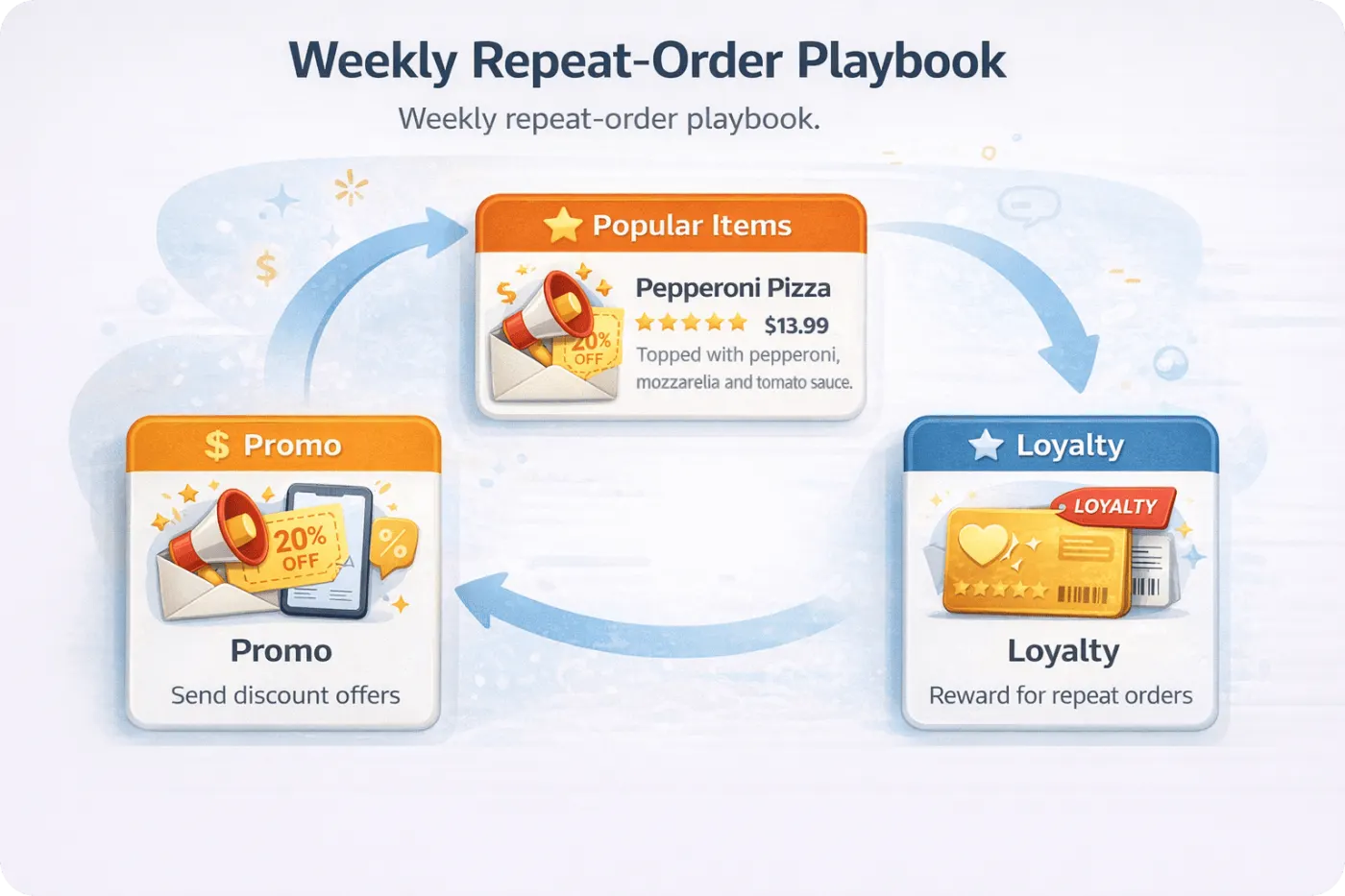
Track a small set of measures
- Direct orders as a share of comparable orders
- Eligible and recovered carts
- Repeat purchase within a defined period
- Average order value and contribution margin
- Offer or reward use
- Unsubscribes, complaints, and support contacts
Move 1: one direct-order offer
Choose one understandable offer, one audience, one period, and one action. Examples include a relevant add-on, a direct-only bundle, or a pickup benefit. Calculate item cost, discount, fees, cannibalization, and margin before launch.
Offer checklist
- State eligibility and end time clearly
- Show the offer where the customer decides
- Avoid stacking rules the customer cannot predict
- Apply the benefit consistently
- Compare with a relevant baseline
Move 2: consent-based cart recovery
A saved cart reminder should return the customer to the correct cart and explain any change in availability, price, fees, or offer. Send only through channels and timing the customer consented to, provide an opt-out, and limit frequency.
Recovery checklist
- Define what counts as abandonment
- Exclude completed, cancelled, invalid, or unavailable carts
- Use a secure expiring cart link
- Stop messages after conversion or opt-out
- Measure recovered orders and complaints, not clicks alone
Move 3: loyalty customers can understand
A stamp, points, or tier model should explain earning, expiry, redemption, exclusions, and account recovery in plain language. Test the cost and behavior instead of assuming a particular percentage or threshold fits every restaurant.
A 30-minute operating routine
- Review last week's result and margin
- Choose and publish one offer
- Verify recovery eligibility, consent, links, and stop rules
- Check loyalty progress and redemption
- Record incidents and the next change
Decide what to keep
Repeat an experiment only when the result is incremental, operationally sustainable, and acceptable to customers. Marketplace discovery and direct retention can coexist; measure each channel against its role.