

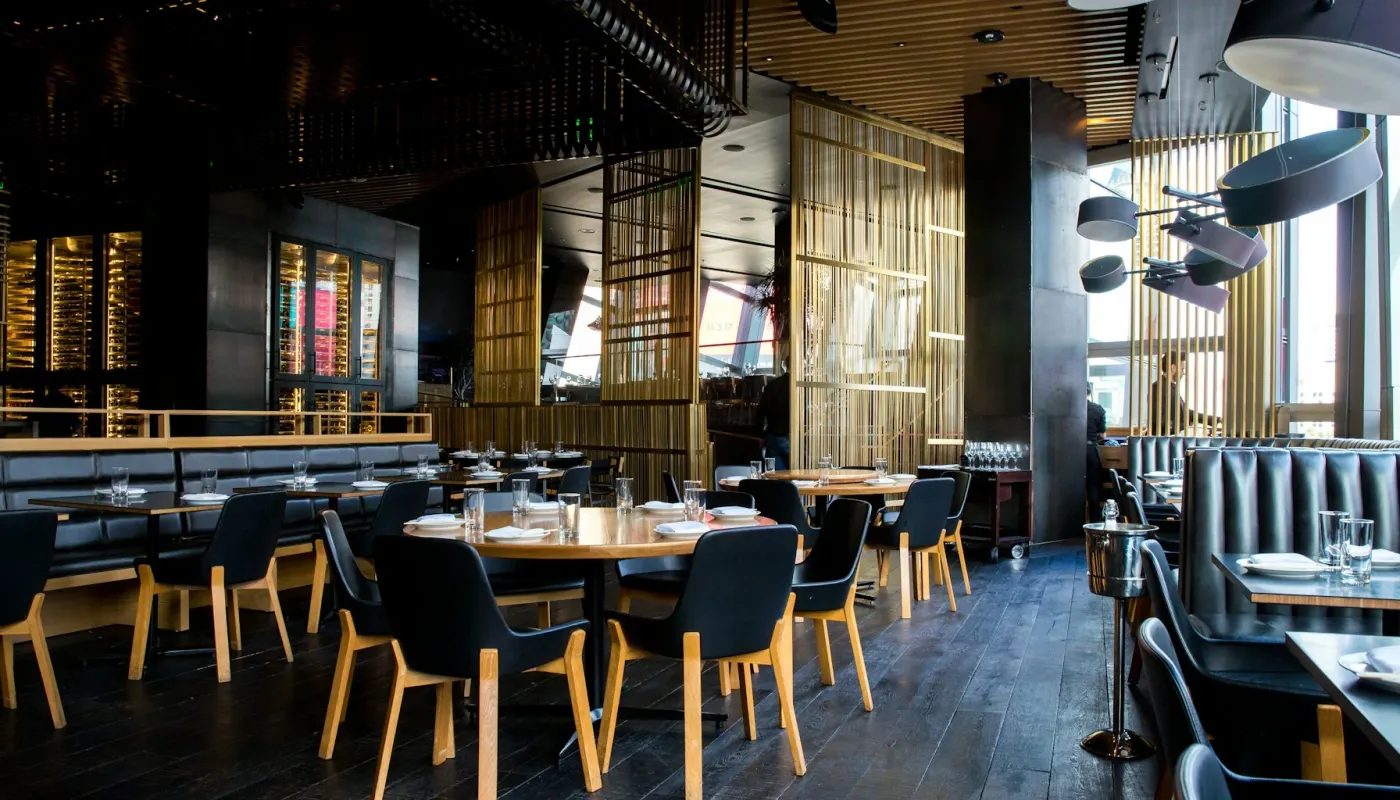
Deloitte's principal Jean Chick says restaurants will look "dramatically different in 10 years" due to AI and shifting consumer demands. The AI in food and beverage market is projected to grow from $13.4 billion in 2025 to $67.7 billion by 2030 at a 38.3% compound annual growth rate. Ghost kitchens will surpass $200 billion. Restaurant robots will reach $3.86 billion. And 80% of restaurant executives are already increasing their AI investment.
But here is the counterpoint that makes this decade interesting: 64% of consumers still prefer traditional dining. The NRA found a 25-point gap between operators who believe tech improves hospitality (65%) and consumers who agree (41%). The restaurant of 2030 will not be a robot cafeteria. It will be a carefully calibrated blend of AI efficiency and human warmth. The winners will be those who get that balance right.
- 67.7B
AI in F&B market by 2030
- 204B+
Ghost kitchen market by 2030
- 80%
Of execs increasing AI investment
- 78M
Net new jobs created by AI globally (WEF)
The AI Restaurant Roadmap: 2026 to 2030
The AI Restaurant Roadmap
2026
Voice AI becomes infrastructure
Voice ordering crosses from experimental to essential. Agentic AI emerges, autonomously adjusting staffing and menus based on weather and events. 26% of operators already using AI tools.
2027
AI and robotics surge in fast food
69% projected increase in AI/robotics adoption in QSR. AI food-tech market reaches $265B. McDonald's targets 250M customers through AI-enabled operations.
2028
Agentic AI goes mainstream
Gartner predicts 33% of enterprise software will include agentic AI (up from 1% in 2024). AI agents autonomously manage inventory, pricing, and customer engagement.
2029
Autonomous supply chains emerge
AI agents manage orders, logistics, and inventory end-to-end. 90% of food consumed globally influenced by AI supply chain processes. Predictive maintenance prevents equipment failures.
2030
The fully connected restaurant
AI in F&B reaches $68B. Ghost kitchens surpass $204B. Chat, voice, kiosk, and in-car ordering all AI-powered. Human-robot kitchen teams are the standard in high-volume operations.
Prediction 1: The Invisible AI Restaurant
The most significant AI in restaurants by 2030 will not be the visible kind. Industry analysts predict a shift toward "invisible AI" that quietly manages hyper-personalized loyalty rewards, dynamic pricing, and real-time inventory without any visible robotics. Think of it as the difference between a robot waiter (flashy but limited) and an AI that knows your favorite dish before you sit down, adjusts the menu price based on demand, and ensures the kitchen has exactly the right ingredients in stock. The future of restaurant AI is not about what you can see. It is about what runs seamlessly in the background.
Prediction 2: Ghost Kitchens Go Mainstream
The ghost kitchen market is projected to surpass $204 billion by 2030, with some estimates approaching $1 trillion globally. Franklin Junction predicts that over 50% of restaurants will operate multiple virtual brands by the end of this decade, potentially reaching 90%. AI makes this possible by managing demand forecasting, menu optimization, and order routing across multiple concepts from a single kitchen. With startup costs of $30K-$100K (versus $1M+ for a traditional restaurant) and labor costs at 10-15% of sales, the economics are compelling.
Restaurant Today (2026)
- Fixed menu updated quarterly
- Manual pricing decisions
- Generic loyalty programs
- Phone and walk-in orders
- Fully human kitchen staff
AI-Enabled Restaurant (2030)
- Dynamic AI menu adapting in real-time
- Algorithmic pricing based on demand/weather
- Predictive loyalty preventing churn
- Omnichannel AI ordering (chat, voice, kiosk, car)
- Human-robot kitchen teams with 99% accuracy
Prediction 3: Hyper-Personalization Becomes the Norm
By 2030, restaurant personalization will shift from explicit to implicit. Instead of asking customers what they want, AI will infer preferences from behavioral cues: ordering patterns, time of day, weather, even data from fitness trackers (with consent). McKinsey research indicates effective personalization can increase customer retention by 20-30% and boost average order values by 10-15%. The emerging frontier includes emotional recognition and mood-based recommendations using voice analysis, though this raises significant privacy questions that regulators are already addressing.
Five Predictions for Restaurant 2030
AI Operations
Autonomous Supply Chains
AI agents will manage orders, logistics, and inventory end-to-end. 90% of food consumed globally will be influenced by AI supply chain processes. Waste reduction of 30-40% becomes standard.
Predictive Equipment Maintenance
IoT sensors on kitchen equipment detect failures days before they happen. AI schedules repairs during off-hours. Downtime drops to near zero for connected kitchens.
Smart Energy and Sustainability
AI optimizes energy consumption, reduces food waste through precision portioning, and manages sustainable sourcing. Consumers willing to pay 9.7% more for sustainably produced food.
Customer Experience
Hyper-Personalization at Scale
AI knows your preferences before you state them. Dynamic menus adapt to individual customers. 57% of diners already prefer personalized offers over generic discounts.
Universal Dynamic Pricing
Real-time price adjustments based on demand, weather, and events. 61% of consumers (71% Gen Z) accept variable pricing by time of day. AI protects margins during slow periods.
Seamless Omnichannel Ordering
Chat, voice, kiosk, in-car, and wearable ordering all connected through a single AI brain. Customers switch channels mid-order without losing context.
Business Models
Ghost Kitchen Explosion
Market surpassing $204B by 2030. 50-90% of restaurants operating multiple virtual brands from single kitchens. AI manages demand across all concepts simultaneously.
AI-Managed Multi-Concept Operations
One kitchen runs 5-10 virtual brands. AI determines which brand to promote based on real-time demand signals, neighborhood demographics, and delivery zone patterns.
Subscription and Membership Dining
AI-powered subscription models where customers pay monthly for personalized meal plans. AI predicts preferences and manages delivery schedules automatically.
Prediction 4: Labor Augmentation, Not Replacement
The World Economic Forum projects that AI will create 170 million new jobs by 2030 while displacing 92 million, a net gain of 78 million positions globally. In restaurants, McKinsey expects fewer positions in their current form, but the transformation is job reallocation, not extinction. Staff shift from repetitive tasks (answering phones, taking routine orders, basic prep) to hospitality-focused roles that AI cannot replicate: reading emotional cues, resolving complex situations, creating memorable human moments. The best restaurants will use AI to free their people to be more human, not less.
Prediction 5: AI Ordering Becomes Universal
Today, 26% of restaurant operators use AI tools. By 2030, AI-powered ordering across chat, voice, kiosk, and in-car channels will be as standard as having a website. The restaurant AI adoption rate is growing at 23% CAGR. 75% of Domino's sales are already digital. 50% of Gen Z prefer tech-enabled dining. The question is not whether AI ordering will become universal. It is whether your restaurant will be ready when it does.
AI Market Projections to 2030
| Segment | 2025 Value | 2030 Projection | CAGR |
|---|---|---|---|
| AI in Food & Beverage | $13.4B | $67.7B | 38.3% |
| Ghost Kitchens | $97.2B | $204B+ | 16.0% |
| Restaurant Service Robots | $2.1B | $3.86B | 17.0% |
| Online Food Delivery | $350B | $505B | 9.4% |
| AI Chatbot Market | $7.76B | $27.3B | 23.3% |
The Risks Nobody Is Talking About
The rush toward AI is not without danger. Stanford's 2025 AI Index Report shows AI incidents jumped 56.4% in a single year. In December 2025, Instacart was caught using AI to show different prices to different customers for identical items, drawing criticism from consumers and policymakers. The EU AI Act is now enforced with penalties up to 7% of global turnover. Texas and Colorado have their own AI regulations taking effect. Restaurants adopting AI must navigate this evolving regulatory landscape or face real consequences.
What Should Your Restaurant Do Right Now?
You do not need to build the restaurant of 2030 overnight. You need to start laying the foundation today with technology that is proven, affordable, and immediately deployable. Here is the practical sequence:
2030 Readiness Plan
Your 5-Step Path to the AI-Enabled Restaurant
Build the future one layer at a time
Deploy AI ordering on WhatsApp and web chat
This is the foundation. Every order generates customer data that powers everything else. 95%+ accuracy, 2B+ WhatsApp users, no hardware needed. Setup in 48 hours with Ordering.co.
Build customer intelligence through every interaction
Use conversation analytics to understand ordering patterns, preferences, peak times, and customization trends. This data becomes your competitive moat.
Launch AI-powered campaigns and promotions
Turn customer data into personalized WhatsApp offers. Retention marketing delivers 5,200-6,900% ROI. Reduce your $375K annual churn cost.
Add voice AI for phone and drive-thru as it matures
When accuracy consistently hits 95%+, expand to voice ordering channels. Capture the 87% of missed calls that become revenue.
Prepare for connected kitchen and delivery automation
As costs decrease, integrate kitchen robotics and explore drone/robot delivery partnerships. Your AI ordering data will seamlessly feed these systems.
The Path from 2026 to 2030
Build your AI restaurant layer by layer
2026: AI Chat Ordering
Deploy WhatsApp and web chat ordering. Capture customer data. Build the foundation.
2027: AI Marketing + Loyalty
Launch personalized campaigns. Automate loyalty. Turn data into repeat orders.
2028: Voice + Kitchen Automation
Add voice ordering. Integrate kitchen robotics for high-volume operations.
2030: Fully Connected AI Restaurant
Every channel AI-powered. Supply chain automated. Human staff focused on hospitality.
The restaurant of 2030 will not be built in 2030. It will be built by the decisions restaurant owners make today. Every AI interaction you deploy now is a brick in that future.
Start Building Your 2030 Restaurant
The Foundation Starts with AI Ordering
Ordering.co Ordering Agents give you the first layer: AI chat ordering on WhatsApp and web, 24/7, in 50+ languages. Every order builds your customer intelligence. Every conversation powers your marketing. Start today.
Frequently Asked Questions
Everything you need to know about AI in restaurants by 2030
What will restaurants look like in 2030?
Restaurants in 2030 will blend AI efficiency with human hospitality. Expect invisible AI managing personalization, pricing, and inventory behind the scenes. Ghost kitchens will operate multiple virtual brands from single locations. Human-robot kitchen teams will handle high-volume preparation. Staff will focus on hospitality rather than repetitive tasks. 64% of consumers still prefer traditional dining, so the winning formula will be technology that enhances human connection.
How big will the AI market be for food service by 2030?
The AI in food and beverage market is projected to reach $67.7 billion by 2030, growing at 38.3% CAGR from $13.4 billion in 2025. The ghost kitchen market will surpass $204 billion. Restaurant service robots will reach $3.86 billion. Online food delivery will hit $505 billion. Total restaurant and foodservice sales in the US alone are projected at $1.55 trillion.
Will AI replace restaurant workers?
The World Economic Forum projects AI will create 170 million new jobs while displacing 92 million by 2030, a net gain of 78 million positions globally. In restaurants, the transformation is job reallocation, not extinction. Staff shift from repetitive tasks to hospitality roles. 57% of workers report task augmentation rather than replacement. PwC research shows job numbers are actually rising in AI-exposed occupations.
What are ghost kitchens and how will they evolve?
Ghost kitchens are delivery-only food preparation facilities with no dine-in customers. The market is projected to surpass $204 billion by 2030. AI will enable single kitchens to operate 5-10 virtual brands simultaneously, managing demand forecasting and menu optimization across all concepts. Startup costs are $30K-$100K versus $1M+ for traditional restaurants, with break-even in approximately 6 months.
How will AI personalize the dining experience?
By 2030, personalization shifts from explicit (asking preferences) to implicit (inferring from behavior). AI will analyze ordering patterns, timing, weather, and behavioral cues to predict what customers want before they order. McKinsey research shows effective personalization increases retention by 20-30% and boosts order values by 10-15%. 57% of diners already prefer personalized offers over generic discounts.
What are the risks of AI in restaurants?
Key risks include algorithmic pricing discrimination (Instacart was caught charging different prices to different customers), data privacy concerns (AI incidents jumped 56.4% in one year per Stanford), regulatory compliance (EU AI Act penalties up to 7% of turnover), and consumer backlash (25% would avoid restaurants after negative AI encounters). The NRA hospitality gap shows operators overestimate how much consumers value technology.
Which AI technologies should restaurants adopt first?
AI chat ordering on WhatsApp and web chat is the recommended starting point. It requires no hardware, deploys in 48 hours, achieves 95%+ accuracy, and reaches 2 billion users. Every order generates customer data that powers future marketing, loyalty, and operational decisions. Voice AI, kitchen robotics, and delivery automation should follow as those technologies mature and costs decrease.
How can restaurants prepare for 2030 today?
Start with AI ordering to capture customer data as your foundation. Launch personalized campaigns using that data. Build AI-powered loyalty programs. Add voice AI as accuracy improves. Prepare for kitchen and delivery automation as costs come down. The restaurant of 2030 is built layer by layer, starting with the proven, affordable technologies available today like Ordering.co Ordering Agents.
The Future Starts with Your Next Order
Deploy AI chat ordering today. Build your customer intelligence. Layer on automation as the technology matures.