

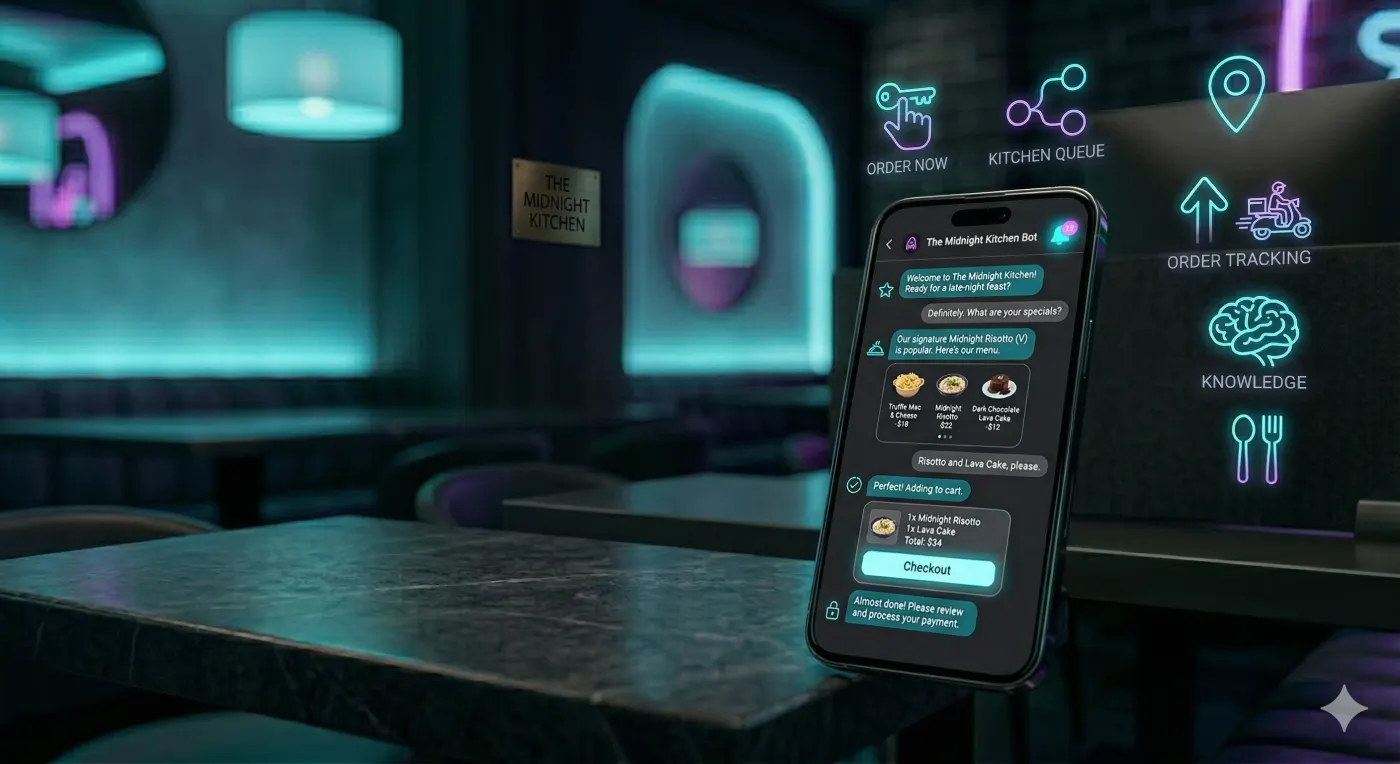
Between 2 and 5 PM, your kitchen is staffed, your rent is running, and your dining room is empty. That three-hour dead zone costs you more than any bad review ever could. AI does not wait for customers to show up. It reaches out to the right people at the right time and gives them a reason to walk through your door.
The Hidden Cost of Empty Tables
Every restaurant has a rhythm. Friday dinner rush, Saturday brunch crowds, the occasional Wednesday surge. But between those peaks lie valleys: the Monday through Wednesday slump, the 2 to 5 PM dead zone, the post-holiday January lull. During these periods, your fixed costs keep running while your revenue flatlines. Rent, utilities, insurance, and base labor do not pause because the dining room is quiet.
The traditional response is to wait for peak hours to make up the difference. But that is like a hotel that only sells rooms on weekends. The hospitality industry solved this decades ago with revenue management: dynamic strategies that fill every available unit at every available hour. Restaurants are finally catching up, and AI is the engine making it possible.
- 30-35%
Revenue spent on labor, much wasted in off-peak
- 95%
Accuracy of AI demand forecasting
- 20%
Overstaffing reduction with predictive analytics
- 9%
Revenue increase from AI-driven optimization
The Anatomy of Off-Peak: Where Your Revenue Disappears
Off-peak is not one problem. It is four distinct revenue gaps, each with different causes and different AI solutions. Understanding which gaps affect your restaurant is the first step to closing them.
The Four Off-Peak Revenue Gaps
| Gap Type | When It Happens | Why It Happens | AI Solution |
|---|---|---|---|
| The Afternoon Dead Zone | 2:00 PM - 5:00 PM daily | Too late for lunch, too early for dinner. Most restaurants accept it as inevitable. | Target nearby office workers and remote workers with afternoon snack and early dinner offers |
| The Early-Week Slump | Monday - Wednesday | Weekend dining momentum fades. Customers default to cooking at home. | Proactive outreach to weekday regulars with personalized incentives timed to their patterns |
| The Seasonal Dip | January, post-holidays, summer lulls | Consumer fatigue after holiday spending. Weather-dependent traffic shifts. | Predictive campaigns launched 2-3 weeks before seasonal dips with preemptive engagement |
| The Late-Night Fade | After 9:00 PM weeknights | Kitchen starts closing, staff winds down, no new customers expected. | Last-call promotions to delivery customers and nearby nightlife audiences |
How AI Predicts the Quiet Before It Arrives
The difference between reactive and proactive off-peak management is prediction. Reactive restaurants look at an empty dining room at 3 PM and scramble. Proactive restaurants knew at 10 AM that today would be slow and already triggered outreach to 200 nearby customers before anyone had lunch. AI makes this prediction possible by analyzing multiple signals simultaneously.
Historical Traffic Patterns
AI learns that your restaurant is consistently 40% empty on Tuesdays between 2-5 PM. It pre-schedules outreach every Tuesday morning.
Weather Forecasting
Rain predicted for tonight? AI shifts messaging to delivery-focused offers for dinner. Sunny afternoon? Patio specials to walk-in traffic.
Local Event Data
No major events downtown today. AI recognizes reduced foot traffic and triggers proactive outreach to compensate.
Reservation Velocity
By noon, only 3 dinner reservations vs your usual 15. AI detects the shortfall and launches a same-day campaign.
Seasonal Calendars
January post-holiday slump approaching. AI launches a re-engagement campaign to regulars two weeks before the dip historically begins.
The Proactive Outreach Playbook: Daypart by Daypart
Each off-peak period requires a different type of outreach to the right audience at the right time. The key principle: reach customers BEFORE they make their dining decision, not after the decision window has closed.
Daypart Strategies
Off-Peak Outreach by Time of Day
Different hours need different approaches
The Morning Gap (6-8 AM)
Target commuters and early risers with grab-and-go breakfast bundles. Send at 6 AM to customers who have ordered morning items before. Coffee plus pastry deals convert well.
The Lunch-Dinner Desert (2-5 PM)
Target remote workers, students, and early diners. Afternoon snack menus, happy hour pre-games, and early bird dinner pricing. Send at 1 PM when the afternoon decision point begins.
The Early Evening Lull (5-6:30 PM)
Target families with children and seniors who prefer early dining. Kids eat free before 6 PM or senior early bird specials. Send at 4 PM to match planning windows.
The Late-Night Fade (9 PM+)
Target delivery customers, nightlife goers, and late workers. Last kitchen call promotions and late-night comfort food specials. Send at 8:30 PM to catch the decision moment.
The Weekend Downtime (Sat-Sun 2-5 PM)
Target shoppers and families between brunch and dinner. Afternoon tea service, dessert tastings, or snack platters for sharing. Send at noon when afternoon plans are forming.
Revenue Management: What Airlines Taught Restaurants
Airlines never sell every seat at the same price. Hotels adjust rates by season, day, and demand. Yet most restaurants charge the same price for a Tuesday 3 PM table as a Saturday 8 PM table. That is changing. AI-powered revenue management brings yield optimization to restaurants by adjusting offers, pricing, and incentives based on real-time demand. Not surge pricing. Strategic value creation.
Revenue Management Mindset Shift
From fixed pricing to dynamic value
Fixed-Price Restaurant
Same price, every hour
Tuesday 3 PM and Saturday 8 PM cost the same. No incentive to visit during slow times.
Accept empty tables
Off-peak emptiness is treated as inevitable, a cost of doing business.
No demand data
Decisions based on gut feeling, not real-time occupancy predictions.
Full overhead, partial revenue
Fixed costs run 24/7 but revenue concentrates in 6-8 peak hours.
Revenue-Managed Restaurant
Dynamic value by daypart
Off-peak offers create urgency and value. Peak hours maintain standard pricing.
Proactive table filling
AI reaches out before gaps appear, ensuring steady occupancy across all hours.
Predictive demand intelligence
95% accurate forecasting means you know tomorrow's slow periods today.
Revenue spread across all hours
Off-peak revenue supplements peak revenue instead of being left on the table.
The Multi-Factor Prediction Engine
What makes AI outreach different from simply posting a discount on Instagram is the precision of when, who, and what to send based on multiple real-time signals. No two days are the same, and the AI knows it.
How AI Decides When to Reach Out
Multiple signals create precise timing
Demand Forecast Generated
AI analyzes historical traffic, current reservations, weather forecast, and local events to predict today's occupancy hour by hour.
Gap Detected
System identifies that 3-6 PM will be 45% below average. Trigger threshold met.
Audience Selected
AI selects customers most likely to respond: nearby office workers, previous afternoon visitors, delivery regulars in the area.
Message Crafted
Personalized offer generated: afternoon snack special for the remote worker, early dinner deal for the family, delivery discount for the homebody.
Outreach Launched
Messages sent at the optimal time for each segment. 98% read rate ensures the message lands before the decision window closes.
Beyond Discounts: Creative Off-Peak Strategies That Work
Filling off-peak hours does not always require discounting. Some of the most effective strategies create new reasons to visit rather than cheaper versions of existing ones. AI identifies which strategy works best for which customer segment.
Afternoon Experience Menus
Curated snack boards, dessert tastings, or afternoon tea services that create a new reason to visit between 2-5 PM. Not a discount. A new product.
Work-From-Restaurant Packages
Free WiFi, outlet access, bottomless coffee, and a quiet table for remote workers. Fill the 10 AM-2 PM gap with a new customer segment entirely.
Off-Peak Classes and Events
Cooking classes, wine tastings, or chef's table experiences scheduled during dead hours. Premium pricing, zero discounting, full tables.
Family Early-Bird Programs
Kids eat free before 6 PM. Story time at 4 PM. Families fill early evening slots and free up peak hours for adult diners.
Measuring Off-Peak Outreach Performance
The right metrics prove your off-peak strategy is working. Focus on incremental revenue and capacity utilization, not just total covers. A table filled at 3 PM that would otherwise be empty is pure incremental revenue, even at a lower check average.
Off-Peak Performance Dashboard
Capacity
Off-Peak Seat Utilization
Percentage of available seats filled during non-peak hours. Track weekly trend. Target: 60%+ (up from typical 30-40%).
Daypart Revenue Distribution
Revenue share by daypart. Goal: shift from 80/20 peak/off-peak split to 65/35.
Table Turn Rate by Hour
How many times each table is used per hour across the full operating day.
Outreach
Campaign Trigger Accuracy
Percentage of AI-predicted slow periods that actually occurred. Benchmark: 95%.
Message-to-Visit Rate
Percentage of outreach recipients who visit within 24 hours. Target: 8-15%.
Outreach Cost per Filled Seat
Total outreach cost divided by incremental off-peak covers generated.
Revenue
Incremental Off-Peak Revenue
Revenue from customers who visited specifically because of off-peak outreach.
Off-Peak Check Average
Average spend during off-peak hours. Should increase as you move from pure discounting to value creation.
Labor Cost Efficiency
Revenue per labor hour during off-peak. Goal: narrow the gap between peak and off-peak efficiency.
Ready to Fill Every Hour, Not Just Peak Hours?
Turn Your Quiet Hours into Revenue Hours
Ordering.co AI predicts slow periods, triggers proactive outreach, and fills your tables before the empty seats cost you money. Automated, intelligent, always on.
Frequently Asked Questions
AI-powered off-peak engagement for restaurants
What are off-peak hours for restaurants and why do they matter?
Off-peak hours are periods of low customer traffic, typically 2-5 PM weekdays, Monday through Wednesday evenings, post-holiday seasons, and late nights. They matter because fixed costs (rent, utilities, base labor) run continuously. Every empty seat during off-peak represents revenue lost that peak hours cannot fully recover.
How does AI predict slow periods before they happen?
AI analyzes five signals simultaneously: historical traffic patterns, weather forecasts, local event calendars, current reservation velocity, and seasonal trends. With 95% accuracy, it can predict tomorrow's slow periods today, giving you time to launch proactive outreach before the dining decision window closes.
What is revenue management and how does it apply to restaurants?
Revenue management is a strategy borrowed from airlines and hotels that adjusts pricing and incentives based on demand. For restaurants, it means offering dynamic value during off-peak hours (not raising prices during peak). A Tuesday 3 PM afternoon special fills a table that would otherwise generate zero revenue.
How does AI decide which customers to reach out to during off-peak?
AI selects recipients based on behavioral data: nearby customers, previous off-peak visitors, delivery regulars in the area, and customers whose ordering patterns match the daypart. Each receives a personalized message matching their preferences, sent at the optimal time for their decision-making pattern.
Do off-peak strategies always require discounting?
The best off-peak strategies create new demand rather than discounting existing offerings. Afternoon experience menus, work-from-restaurant packages, cooking classes, and family early-bird programs fill tables at full or premium pricing by giving customers a new reason to visit during hours they would not normally consider.
What results can restaurants expect from AI off-peak outreach?
Restaurants using AI-driven optimization typically see 9% revenue increases, 20% reduction in overstaffing costs, and 30-40% improvement in food waste. Off-peak seat utilization can improve from 30-40% to 60%+ with consistent proactive outreach and demand-responsive programming.
How is this different from just running promotions on slow nights?
Promotions on slow nights are reactive and time-limited. AI off-peak outreach is predictive and continuous. It covers all four gap types (afternoon, early-week, seasonal, late-night), uses multi-factor prediction for precise timing, creates new demand through daypart innovation, and runs automatically every day.
Can small restaurants implement off-peak AI outreach?
Small restaurants often benefit most because they have the most idle capacity to fill. AI chat platforms handle the prediction, audience selection, and message delivery automatically. You set your parameters (minimum covers needed, maximum discount depth, target dayparts) and the system runs on autopilot.
Empty Tables Have a Cost. AI Fills Them Before You Notice They Are Empty.
Proactive outreach that turns every hour into a revenue hour.