

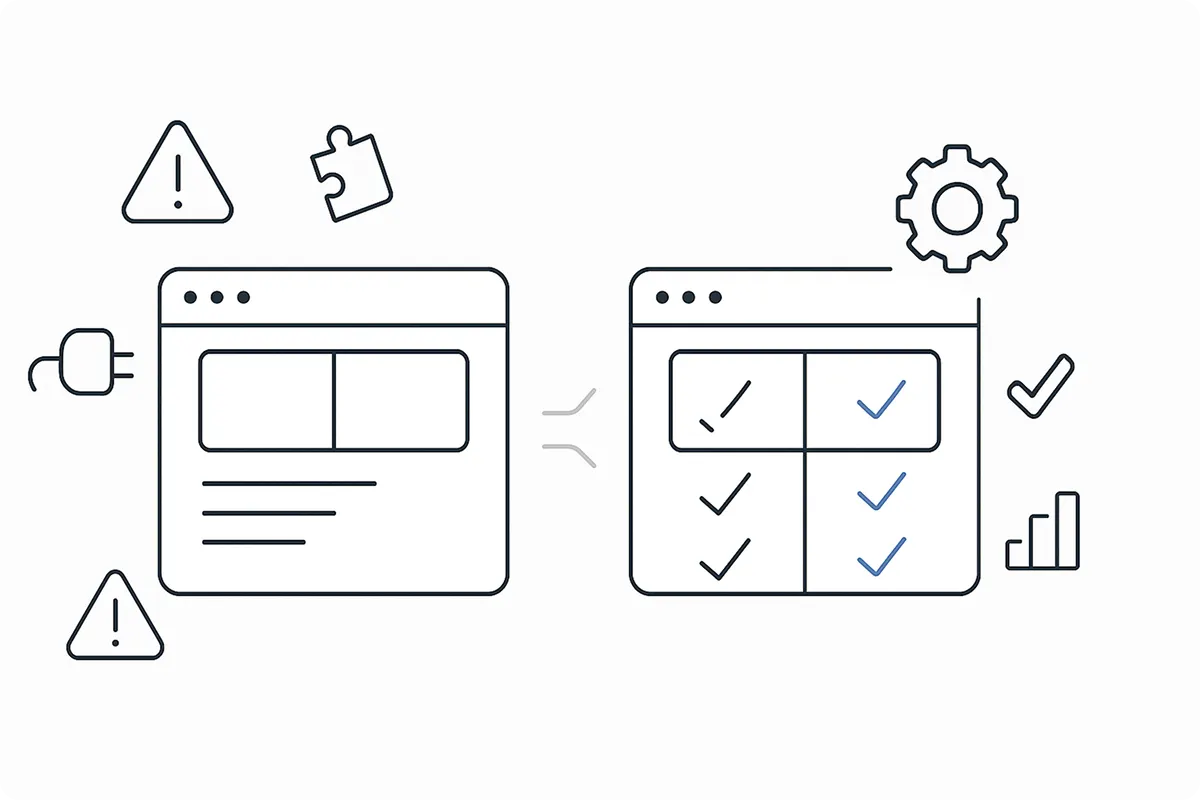
You didn’t build it wrong.
You built it fast.
And that was the issue.
Most platforms launched this year using vibe code, internal tools, or stitched integrations did exactly what they were supposed to do:
they proved demand, validated the idea, and got real users ordering.
But here’s the uncomfortable truth most teams are about to face:
What works as an MVP rarely survives real volume.
And 2026 is not going to be forgiving.
MVPs Don’t Scale (And That’s Not a Failure)
Let’s be clear:
MVPs are not meant to scale.
They are meant to answer one question:
“Will anyone actually use this?”
So teams optimize for:
- Speed over structure
- Shortcuts over resilience
- “Good enough” over predictable performance
That’s fine — until volume shows up.
Because once orders increase, integrations multiply, and edge cases appear, vibe-coded builds start to show patterns:
- Flows that work 95% of the time
- Plugins that break after updates
- Manual fixes that become permanent
- Features added without a system behind them
Nothing explodes.
It just becomes fragile.
And fragile systems don’t fail loudly — they fail quietly.
December Is When Things Start Cracking
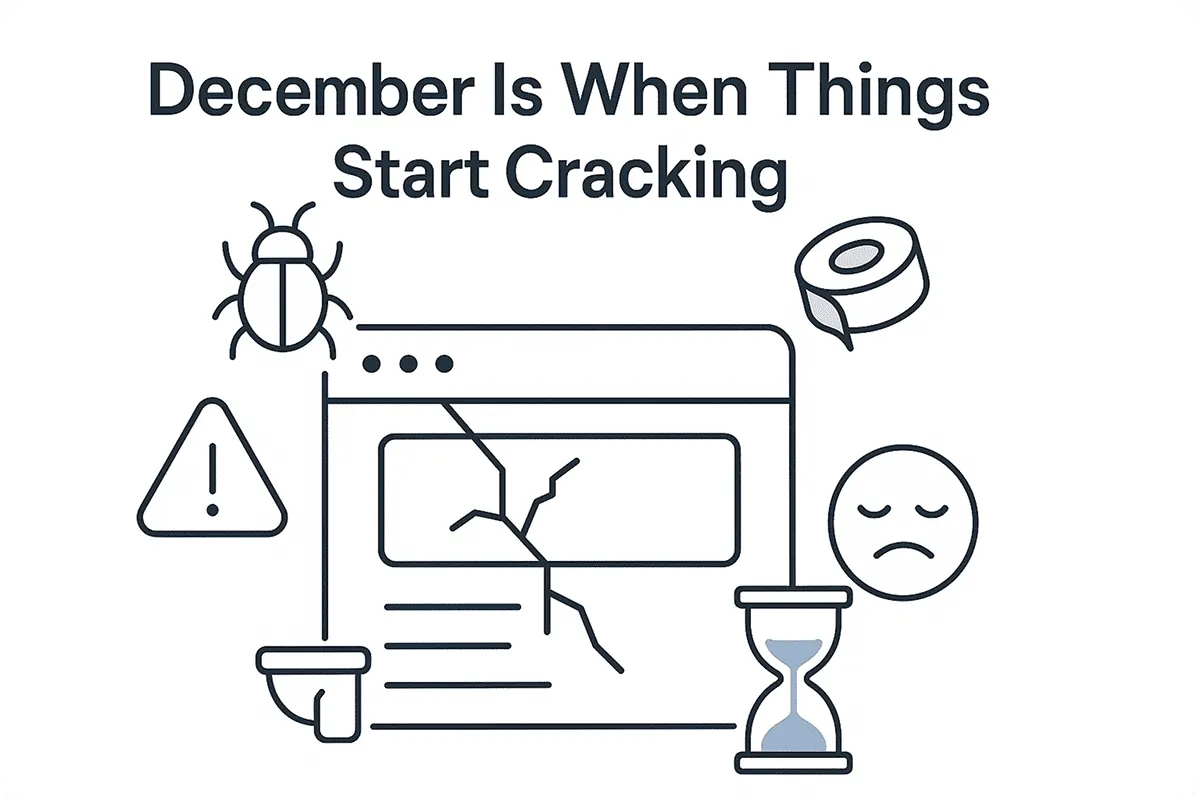
December exposes problems faster than any other month.
Not because teams are careless — but because reality changes.
Here’s what usually happens:
- Holiday traffic introduces volume spikes
- Minor bugs pile up faster than they’re fixed
- Teams patch instead of improving
- Engineers get tired of “temporary” solutions
At the same time:
- Decision-making slows
- Approvals take longer
- External vendors respond later
So issues don’t get resolved — they get deferred.
By the end of December, many teams aren’t scaling anymore.
They’re just trying to hold things together.
What You Actually Need in January
Most teams think January is about “going harder.”
It’s not.
January is about survival under pressure.
By then, you don’t need:
- Another plugin
- Another workaround
- Another sprint just to fix what broke
You need fundamentals:
SLA-level uptime
Your platform must stay reliable under real demand — not just on calm days.
Feature velocity
New features shouldn’t destabilize the system. They should ship cleanly.
Support you can rely on
Because when things go wrong, silence is the most expensive failure.
This is where most MVPs collapse — not because they’re bad, but because they were never designed for this phase.
Ordering Is the Quiet Upgrade

Here’s the part most teams miss:
The best time to fix your platform is when no one is watching.
Ordering exists for this exact moment.
We help teams quietly move off fragile builds and onto a system designed for real operations — without disrupting their momentum.
No drama.
No rushed rebuilds in January.
No public failures.
Most migrations take 14 days.
We rebuild it right:
- Stable infrastructure
- Scalable order flows
- Predictable performance
- Support that doesn’t disappear
So when volume hits again, your platform doesn’t flinch.
Fix It Before January Puts Pressure on It
January doesn’t create problems.
It reveals them.
And the difference between teams that grow in 2026 and teams that stall usually comes down to one thing:
Did they fix their foundation before it mattered?
If your platform was built fast this year, that was smart.
Now it needs to last.
👉 Before January puts pressure on your system, book a strategy call.
We’ll review your current setup and tell you honestly if it’s time for a quiet upgrade.